

Neither Message nor Method
A Conversation with Nicolas Philibert
You can read the first part of this conversation here.
Part Two
5. Chance and Mise-en-scène, Observation and Intervention
Elias Grootaers: On the relationship between chance and mise-en-scène, observation and intervention, there are three scenes in particular we’d like to discuss. Let’s start with the scene in La ville Louvre that you mentioned earlier, in which a woman walks through the museum carrying a small ceramic pot. We follow her through different parts of the building and hear how the acoustics change depending on the materials underfoot. Could you tell us how that scene came about?
Nicolas Philibert: I asked this woman whether she would let us accompany her on the long, labyrinthine journey down to the Near Eastern Antiquities storerooms. It was a journey she made every day. She gave us two hours of her time so that I could break the sequence down into several shots. I suggested she wear high heels, so that the steady sound of her footsteps would bring out the different flooring materials and establish a kind of rhythm. First she walks across marble slabs: her footsteps echo. Then she crosses carpets, which muffle the sound. She opens a door, descends a bare concrete staircase, follows a corridor lined with plywood boards: her footsteps grow louder and more resonant. She goes down a few more steps, opens another door and there, in the storerooms, the floor is covered with lino. She isn’t making this long journey empty-handed. She’s carrying a basket containing an object. We have no idea what it is until she reaches her destination and unwraps it, revealing a perfectly ordinary little pot… What? All that for this? Well, yes: if she’s gone to all that trouble, it must be precious.
Grootaers: There’s also that scene where some art handlers are working on a display case, and then the camera finds itself inside it. The scene makes a great deal of the difference in acoustics.
As I’ve already mentioned, La ville Louvre relies heavily on sound: the swishing noises, the footsteps, the acousticians, the clock winders… We’re in these imposing spaces, with high ceilings, where every noise reverberates. At first, the sound engineer was tearing his hair out. In some rooms, you could barely make out what people were saying. But what could we do? We weren’t going to bring in carpets! We might as well make a virtue of it, forget about dialogue and concentrate instead on people’s gestures, their physical mannerisms, the different ways they walked, giving the film a more comic, even slapstick quality. So we see the paintings curator striding along, followed a moment later by the shuffling steps of a humble painter who walks past masterpieces before ending up on all fours to paint a skirting board.
Grootaers: Does this film take us into something approaching Tati territory?
That’s not entirely wrong. Though I wasn’t conscious of it when I was making the film.
Gerard-Jan Claes: You’ve also compared the film to a ballet, which seems very apt to us.
Yes, people move through the spaces, artworks are carried about, glide, take flight, spin through the air. The whole museum is in motion. I’m also thinking of a shot filmed early in the morning, of a little army of men dressed entirely in red, sweeping a courtyard in perfect unison. It looks like choreography.
Claes: One has the impression that a great many scenes in La ville Louvre were staged. But when I watched the film again, I realised that wasn’t the case at all: much of it is observational. It’s curious, because my memory is of a film that was very carefully constructed, with a great deal of intervention on your part.
There are three sequences that are entirely staged: the woman’s journey we’ve just been discussing, the scene in which the firefighters collect an injured man and the portraits of the museum guards at the very end. After the sequence with the fire extinguishers and the lesson in mouth-to-mouth resuscitation, I wanted the firefighters to appear a third time. I went to see them and they were happy to play along. The injured man is an extra. I placed him in one of the Egyptian Antiquities galleries. The firefighters lift him onto a stretcher and carry him away, under the knowing gaze of the Egyptian deities. But the end of the sequence explicitly reveals the artifice: the camera takes the injured man’s place and films the firefighters carrying him away from a low angle, with the ceilings passing overhead.
Claes: There’s another scene we’d like to discuss, from Le pays des sourds, in which the children go back into the school after having their class photograph taken. The deaf children pass through the foreground, while in the background another group of children are singing in a classroom. Was that scene staged too?
No, that was pure chance. There happened to be a singing rehearsal that day for a class of hearing children. The deaf children walk past them, and the juxtaposition is moving.
Grootaers: But it’s still a matter of framing, of composing the image. You realise that a particular shot is possible, so you ask the deaf children to wait a moment while you set up the camera inside.
When we saw this group of pupils singing, we decided to film the shot. We did indeed ask the deaf children to wait until we were inside, and once the camera was in position, we signalled to them to come into the school. It all happened very quickly. In the edit, there are three shots. First, as soon as the class photograph has been taken, the children line up and head towards the school. Second, they stream into the building and pass the children who are singing. Third, we hear the end of the song over a shot of the foliage in the courtyard.
Claes: There’s something fictional about that scene.
Grootaers: The viewer seems to be witnessing a kind of “conspiracy” between the filmmaker and the people in the film, the gentle “conspiracy” of the mise-en-scène.
In a sense, everything is “mise en scene”, as you know as well as I do! Ever since Nanook of the North, we’ve known that a documentary isn’t raw reality, that it always involves a reworking, an interpretation of reality – and that it is therefore always a form of fiction, too.
Grootaers: But can we distinguish between a documentary cinema where the mise-en-scène is more apparent and one where it is less so?
Of course. You can choose to emphasise it, just as you can try to make it invisible, imperceptible, with every possible gradation in between. But the same is true of fiction filmmaking. Take Loach and Godard. They’re worlds apart. Ken Loach’s whole approach is to make you forget the staging, to give his films the appearance of reality, whereas Godard delights in drawing attention to it.
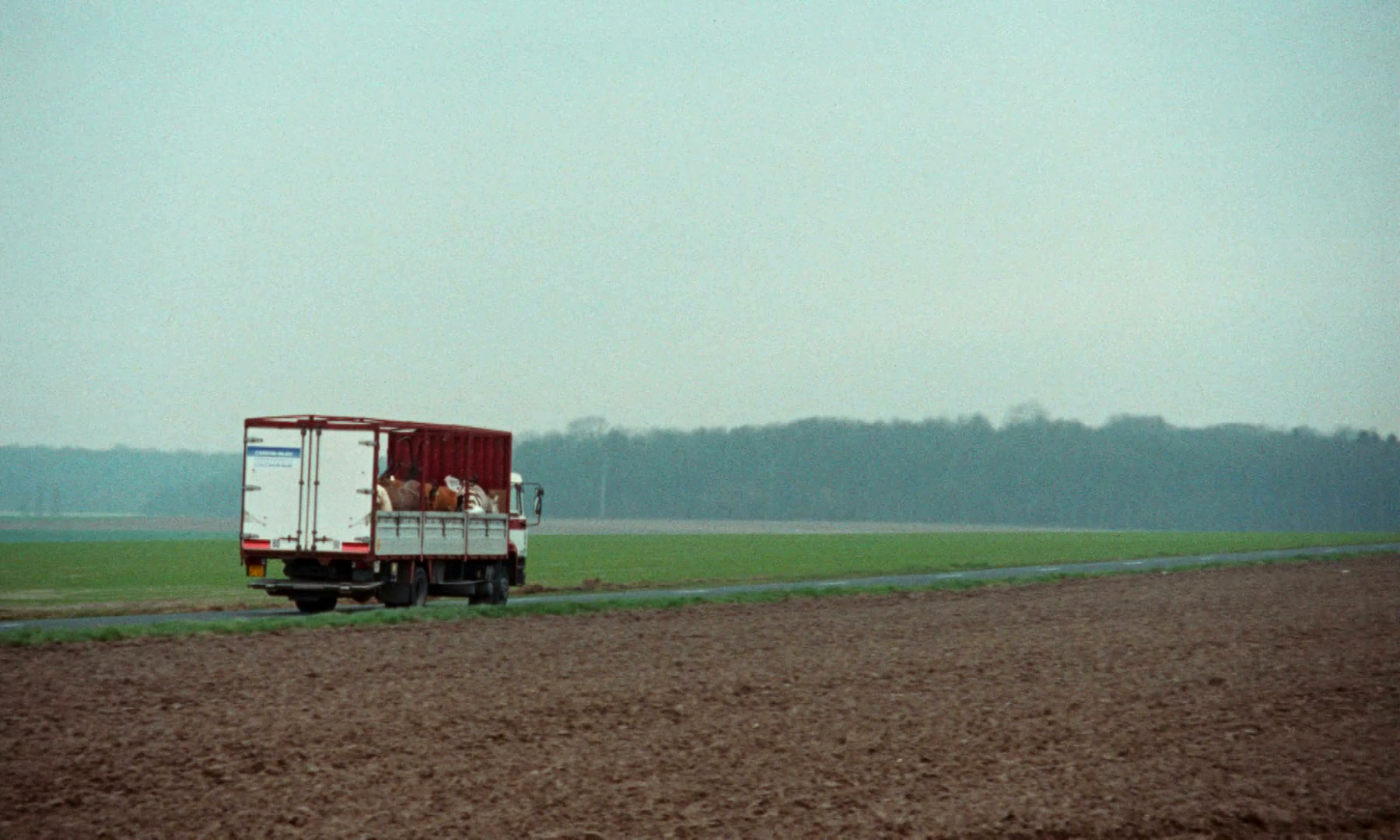
Grootaers: The third scene we’d like to discuss comes at the beginning of Un animal, des animaux. We see a lorry loaded with taxidermied animals driving across a field. The back of the lorry is open, the animals’ heads protruding above the sides, gazing out at the landscape. It’s all rather strange, since the museum is in Paris, and the scene seems to depart from the normal “rules” of reality. Was this something you arranged?
Normally, those specimens would have travelled incognito, in a covered lorry, but the driver agreed to remove the tarpaulin while I filmed the shot. He hesitated a little because it looked like rain, but in the end it stayed dry. The lorry was bringing back specimens that had been restored outside Paris.
6. The Pleasure of Cinema
Grootaers: La ville Louvre is perhaps more playful than your other films, because it doesn’t really enter into people’s private lives. You get a real sense of the “pleasure of cinema”. In documentary filmmaking, when you construct a scene that conveys the pleasure of the mise-en-scène through editing, the effect can spread to the rest of the film. Isn’t this pleasure in mise-en-scène also an essential element of your cinema and, by extension, of documentary filmmaking in general?
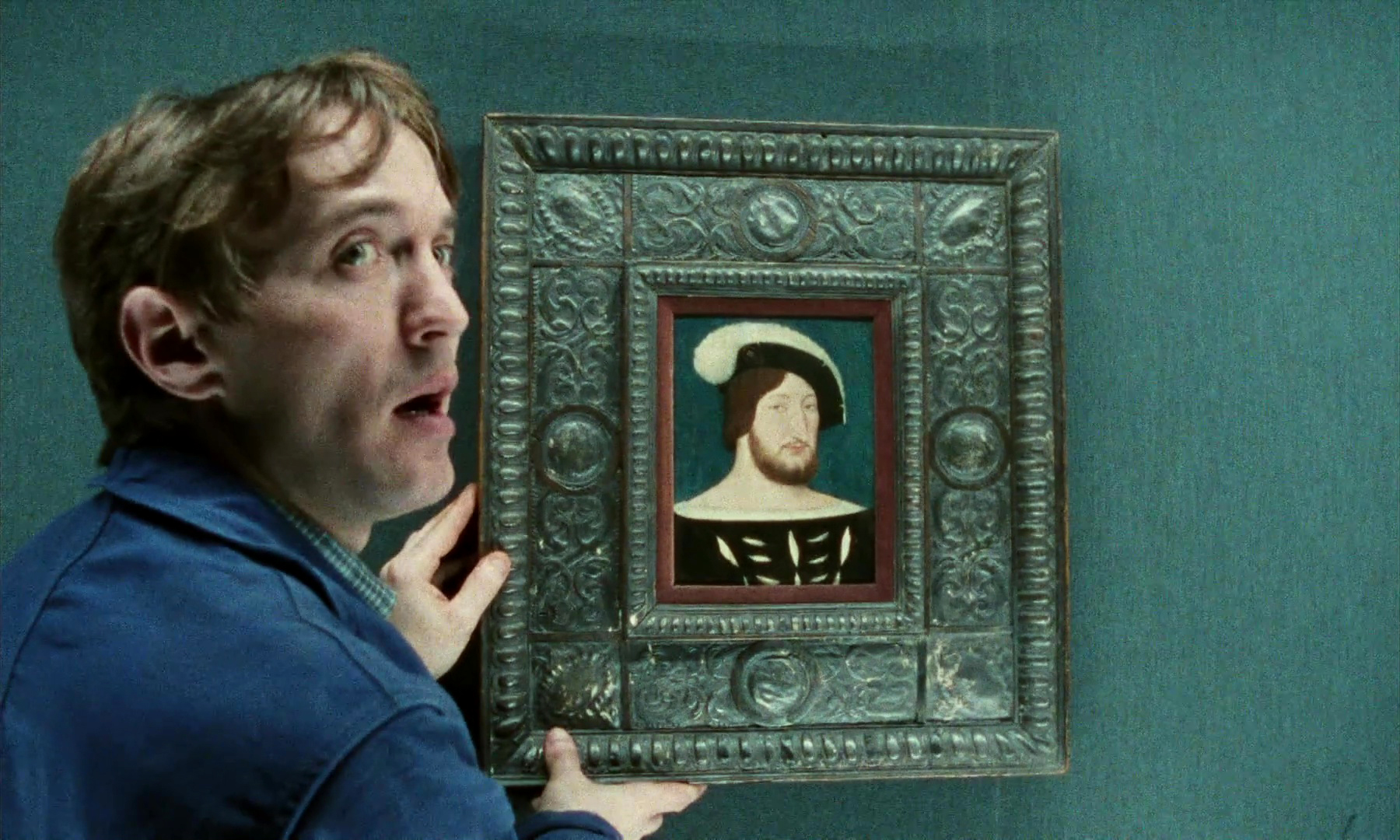
It’s true that I had a lot of fun making the film, and I think it shows. You can sense that people are happy to be filmed, sometimes proud of it too. The two workmen hanging a small painting inside a display case are playing along with us. So are the men who press a huge painting against a wall and then suddenly pop out from behind it. Some of them clown around a bit, crack jokes, show off in front of their mates, but what really matters is that they feel they’re being taken seriously.
Grootaers: But there’s also the “frame”, the shared horizon, the world you construct within the film.
Claes: For example, in Le pays des sourds, Jean-Claude, the sign-language teacher, is something of an accomplice. He seems to have a very good understanding of the film’s space, of how cinema works. He’s very conscious of his role, almost like an actor.
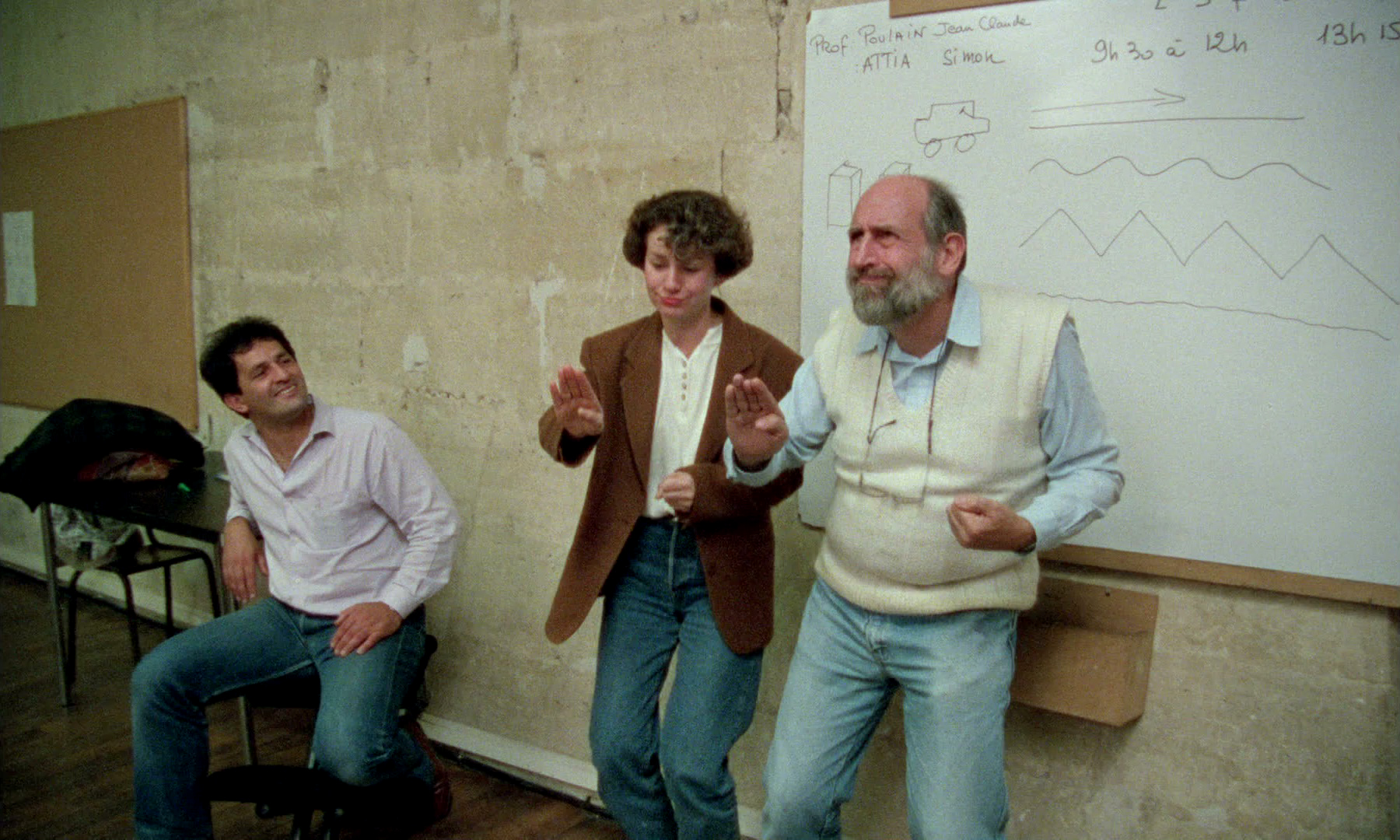
He has a talent for acting, and a real sense of framing – quite literally, since sign language, the visual and spatial language par excellence, operates within a frame that corresponds roughly to what we call an “American shot” in cinema, meaning a shot framed from mid-thigh upwards.
Grootaers: At the beginning of the film, he explains the importance of framing in sign language, using the signs for an aeroplane and a car to show how the gestures must stay within that frame.
The sequence was filmed during a sign-language class for beginners. The students are hearing people, probably parents of deaf children. Jean-Claude begins by showing them the space within which sign language operates. He draws an aeroplane on the blackboard, and the students instinctively spread their arms. He corrects them. No, no, that’s not how you do it! The gestures have to be smaller. You can represent an aeroplane with just one hand, and if you want to make it land, you don’t get down on all fours, you use your other hand to represent the runway. So it’s a question of space, even of framing, since sign language proceeds through a succession of shots, much as a cinematic narrative does.
Imagine I want to say, “Yesterday, I went for a ride on horseback.” It would go something like this: “Yesterday” [he gestures backwards with his thumb over his shoulder], “Horse” [he makes another gesture, placing his index and middle fingers near his temple]. You could say that these first two signs, close to my face, correspond to “close-ups”. But now my horse is this hand, which I hold motionless in front of me, and this time we’re in a wide shot, if you see what I mean. And with my other hand, index and middle fingers spread apart, I mount my horse. [Laughter.] Now, to show that my horse is starting to move, I return to a close-up, something more frontal: I pretend to be holding the reins, with both hands clenched in front of my chest, which I bounce rhythmically as though my horse were trotting. But so far, there’s been no indication that I’m out for a leisurely ride. I might be riding my horse to work, which wouldn’t be the same thing. It’s my face that will convey the idea of a leisurely ride. As I hold the reins, I glance to the right and left, making facial expressions to suggest that I’m enjoying the surrounding landscape. I might even want to describe that landscape, to indicate hills, a forest, the seashore [he makes several signs], who knows… Or I might specify where I am with another sign: Normandy, Burgundy, the Pyrenees… since every proper name has its own sign too. [Laughter.]
Of course, the little phrase I’ve just broken down for you would take a deaf person barely a few seconds to sign, because everything that unfolds in a linear sequence in spoken language becomes simultaneous and multilayered in sign language. Gestures, body orientation, facial expressions, positions, handshapes and movements are interwoven, flowing from one to another at astonishing speed and with extraordinary fluidity. When a deaf person recounts a conversation between several people, they instantly distinguish between the speakers by shifting the orientation of their torso and face, rather as a film might cut back and forth between reverse-angle shots. It’s breathtaking. In sign language, even the blink of an eye can become an element of syntax. If I want to describe someone walking away, I’ll accompany the movement of my arm by gradually narrowing my eyes to indicate that the person is disappearing into the distance. I’ll stop there, but you can see that my aim with this film wasn’t to make audiences feel sorry for deaf people. It was to try to draw them into this visual world and, at the same time, to make viewers “deaf” to the question of sound. Because deaf people are insensitive to sound. Not all of them, of course: not those who became deaf during their lives, since they have auditory memories, but those who were born deaf, yes.
Grootaers: When I teach observation to my students, after we’ve watched Le pays des sourds together, we go back over the same sounds and gestures that Jean-Claude uses. He stresses how important it is to keep your eyes wide open, to really look, to absorb the world, to draw it in through your eyes. It’s a magnificent gesture!
Yes, he speaks proudly of deaf people’s visual acuity and gently makes fun of us hearing people, who don’t know how to see the way they do.
Grootaers: [Referring to Jean-Claude’s gesture] Could that be the sign for “documentary filmmaker”?
I’m sure there’s already a sign for that.
7. Herman Slobbe, Form, and What Comes After
Claes: At the end of his short film Herman Slobbe / Blind Kind 2 [1966], van der Keuken speaks these famous lines: “Everything in a film is a form. Herman is a form. See you later, sweet form.” When I was a student, it took me a long time to understand what “form” might mean. Even today, the word seems deceptive. What is “form” in cinema?
Grootaers: It was the first thing we talked about together, eight years ago. We were on a tram in Ghent, complete strangers – you had come to present your work at our film school – and within a minute we were already discussing the ending of Herman Slobbe!
Really? Yes, “form” is a complicated word… We use it in so many different ways that eventually we no longer know what it means! Have you come all this way just to torture me? [Laughter.] Godard said that cinema is “a form that thinks”, a way of thinking about the world… In French, we distinguish between fond, the content, and forme, the way that content is presented or arranged. But the two are so intertwined that it’s difficult, perhaps even absurd, to separate them. It seems to me that an idea in cinema can encompass content and form simultaneously. I’m thinking of Le pays des sourds, which immerses us in the strange world of sign language, and more specifically of those sequences in which deaf people speak to the camera, one at a time. Each begins with a long silence because I’m asking them a question that we cannot hear, signing it myself from off-screen. I’m also thinking of La maison de la radio, another film I wanted to make because it presented me with an enormous “formal” challenge: how do you make a film about “sound”? How do you convey the nature of a medium – radio – whose defining characteristic is its invisibility, and whose appeal, for most of those who love it, lies precisely in the absence of images? A film whose real subject is speaking and listening, and which constantly draws attention to voices, accents, exchanged glances, facial expressions, gestures, hesitations, silences – everything, in other words, that disappears in a written transcript. You have to bring out the charisma of the guests, the producers, the presenters, their “presence”, in the sense that we speak of a stage actor having presence.
Claes: In French, we also often use another word that’s difficult to translate: “dispositif”. Is that another way of talking about “form”?
For me, dispositif suggests a form that can become oppressive, that can imprison you, a straitjacket.
Grootaers: You’re highlighting a tension that goes to the very heart of documentary cinema. Paying attention to the voice, its texture, its tone, to gestures rather than discourse: some people would see that as an apolitical position. But it’s actually profoundly political. It means taking seriously the singularity of people, places and situations.
I’m glad to hear you say that, because I realise that what I’ve been saying might give the impression that I’m detached from political questions. But on the contrary, I agree with you that these are fundamental political questions. The diversity of voices, accents and languages is a profoundly political matter. What kind of world do we want to live in? I don’t want to live in a country that has succumbed to uniformity, a world where everyone speaks in the same way, everyone looks alike, and differences are diminished or erased. I cherish diversity, this multiplicity of voices, accents, languages, physical appearances, ways of looking, faces.
Claes: Is filming everyday life a form of resistance?
You could see it that way. It’s true that everything conspires to draw us towards the spectacular, the sensational, whereas everyday life, what Georges Perec called the “infra-ordinary”, is quietly full of things that matter, things rich in meaning that we no longer notice. Everyday life may seem monotonous, yet it demands courage of everyone: the courage not to submit, not to be crushed, to provide for your children, care for a sick parent, preserve your dignity.
Claes: Once again, we come back to this tension between a cinema driven by ideas and a cinema that emerges from encounters.
There’s always an intention behind a film, but to my mind it shouldn’t be too obvious. Ideally, it should pass unnoticed, remain hidden somewhere in the film’s shadows. We shouldn’t instrumentalise cinema too much; we need to take care of it. If you subordinate your film to something you want to say, to a message, to a particular discourse, you’re bound to miss what really matters. “If you have a message, don’t bother making a film, send a fax!” as Wiseman says. I’d add that the prospect of relying on established know-how doesn’t appeal to me either. If you already know how to make the film, you might as well not bother. Inevitably, you gain experience over time, you don’t start from scratch every time, but I think you have to try to dislodge yourself from familiar ground, to put yourself to the test, to “reinvent” yourself. Sometimes you even succeed… up to a point.
After the extraordinary success of Être et avoir, I was riding high. Big-name producers were courting me, I was getting offers to direct commercials for McDonald’s, Kinder… You may find this extraordinary, but I turned my back on all of it to make Retour en Normandie. Some foreign distributors had invested money in the film blindly, without even reading the proposal, and they were in for a disappointment!
Grootaers: Let’s return once more to our friend Herman Slobbe. We’ve talked about this notion of form, but the words “see you later” and “sweet” also suggest that we’re dealing with something living. It’s both a form and a life, an image and a reality, fragile or otherwise.
You’re referring to the very end of the film, that astonishing moment when van der Keuken abruptly announces that he has to leave for Spain to shoot another film and declares, “Now we abandon Herman.” It’s a short sentence that says a great deal about cinema, about the cruelty of cinema, about the relationship between cinema and life, about the bond that must have developed between Herman and van der Keuken during the shoot. It raises, in the starkest possible terms, a question of great importance, what I call the question of “what comes after”: what do we leave behind when we make a documentary?
Because yes, once filming is over, the director and crew turn their backs and leave. There’s the editing, the television broadcast or cinema release… But behind the screen there are real people, there’s a real Herman Slobbe left standing there. And what becomes of those people we’ve filmed, whom we’ve thrust into the spotlight and who, sooner or later, have to return to their everyday lives, perhaps with a sense of abandonment mingled with pride – or perhaps not; they may never say anything about it? Who can know in advance how they’ll experience their fifteen minutes of fame, what it will set in motion, what traces it will leave, or how they’ll cope with returning to their former lives? All we can do is try to be mindful of these things.
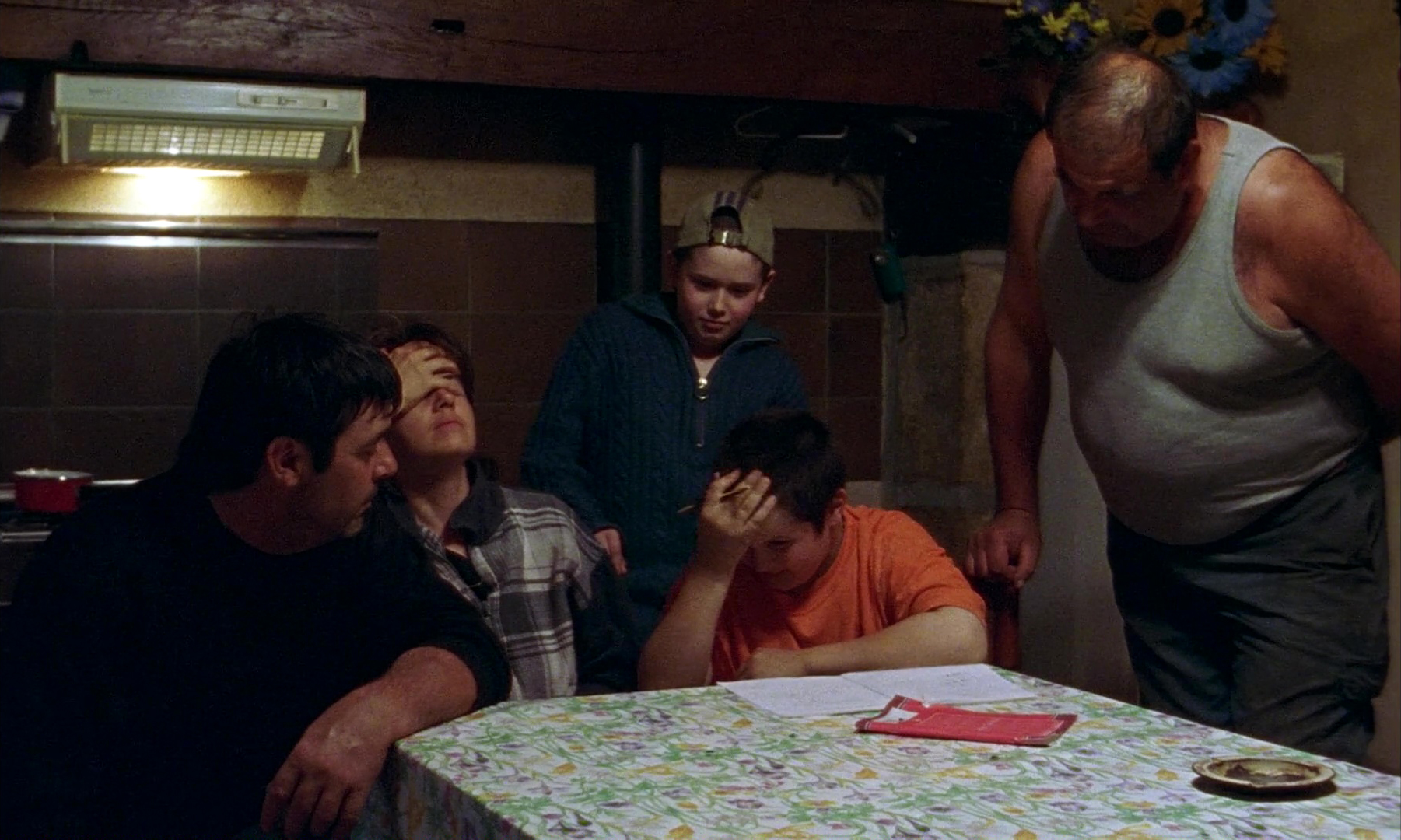
This question of “what comes after” is precisely the subject of Retour en Normandie, the film in which I go back to see how the non-professional actors who appeared in Moi, Pierre Rivière… are getting on. It’s a little different from Herman Slobbe, since Allio’s film wasn’t a documentary. But even so, cinema had burst into their lives unexpectedly. It had been an unforgettable experience, one that would leave a profound mark on them. The film questions cinema itself: what it produces, what it does to people, how it works on us.
Grootaers: It’s often said – and you’ve said so yourself – that cinema, including documentary, is always a form of fiction. But if we take that idea too far, we lose the tension at the heart of documentary cinema: making a documentary also means sharing part of someone’s life. It’s both fiction and life. If you remove either of these two poles, the tension disappears, and with it documentary cinema itself. Because documentary is built on a constant movement between the two.
Van der Keuken has a phrase that captures this tension: “As soon as a person is filmed, they cease to be a person and become a piece of fiction, filmed material. And yet they continue to exist.”
8. Editing
Claes: How does the editing process usually work? Does it take a long time?
I edit alone, and on average it takes me five months to edit a film. For years I worked with an editor, but since La moindre des choses, I’ve edited on my own. I have an assistant who digitises the rushes and organises everything, then comes back at the very end to deal with the technical settings, exports, preparations for post-production and so on. But I do the actual editing alone, and that matters to me. It’s like a solitary voyage. I’m left to my own devices, and I like that. I could never go back to working any other way. Editing alone encourages you to be uncompromising with yourself. People often ask me, “But how do you manage? Don’t you get anyone else’s opinion?” Of course I do. I choose two or three people I trust and leave it at that. Bringing in too many people doesn’t help. Besides, you have to take the feedback you receive with a pinch of salt. Sometimes I’ll actually lengthen a sequence that someone has told me is too long. Not to be clever, but because they’re right that something isn’t working: the sequence is caught somewhere in between. Or perhaps it’s in the wrong place.
Claes: Do you work on the edit continuously?
Yes, I edit continuously… And because I edit at home, it costs the same whether I spend three months or six months on it, so I’m not under any pressure. I switched to digital editing with Être et avoir. I’d still shot on film, but I edited on Avid. I took a two-week training course and then plunged in. At first, I kept my assistant beside me. I’d asked him to “cough” whenever I selected the wrong tool or did something incorrectly. For the first few days, he practically choked!
With digital editing, unlike film, you can save as many versions of an edit as you like, but I’ve never succumbed to that temptation. I might keep two or three versions of a particular sequence, but no more than that.
Claes: Do you do any editing during the shoot, perhaps to test or check certain sequences?
No, but I often spread the shooting over a long period, which gives me a chance to gain some distance. La ville Louvre was shot over five months. So was La maison de la radio. I shoot for a while, stop, start again… It’s irregular, there’s no fixed pattern. La moindre des choses was a more concentrated shoot. Ten weeks in all: eight consecutive weeks leading up to the theatrical performance, a short break, then another two weeks. I watch the rushes, but I don’t start editing until I’ve finished shooting. I did make an exception for Le pays des sourds and Nénette, but those were the only two occasions.
The whole process of shooting is based on uncertainty. As I’ve said, I make things up as I go along. I discover the film in the course of making it, trying things out. Some avenues prove fruitful, others don’t. Inevitably, some material goes to waste. But as the shoot progresses, the film’s underlying structure gradually begins to emerge. On average, I accumulate forty to fifty hours of rushes, but when it comes to editing, I work with only a small proportion of them. I discard much of what I’ve shot right from the outset. Not all the material is of equal quality.
Claes: I have the impression that the editing is faster-paced in your earlier films than in films such as Retour en Normandie, Nénette or La maison de la radio. In Retour en Normandie, there’s this question of duration. By contrast, La ville Louvre moves along at quite a pace.
I’m not sure about that. Take my first film, La voix de son maître: it’s a very slow, very static film. We let the business leaders speak at length without interrupting them or cutting them short. They have all the time they need to develop their thoughts, and we have all the time we need to weigh their implications. I’ll grant you that La ville Louvre depicts a place undergoing a transformation, that there’s movement and activity, but that doesn’t mean the editing is particularly fast. On a related subject, Un animal, des animaux is extremely static, to put it mildly, with all those taxidermied specimens. It’s a film about time. It evokes the naturalists of the eighteenth and nineteenth centuries who went out collecting animals, plants and minerals, comparing, classifying and naming them.
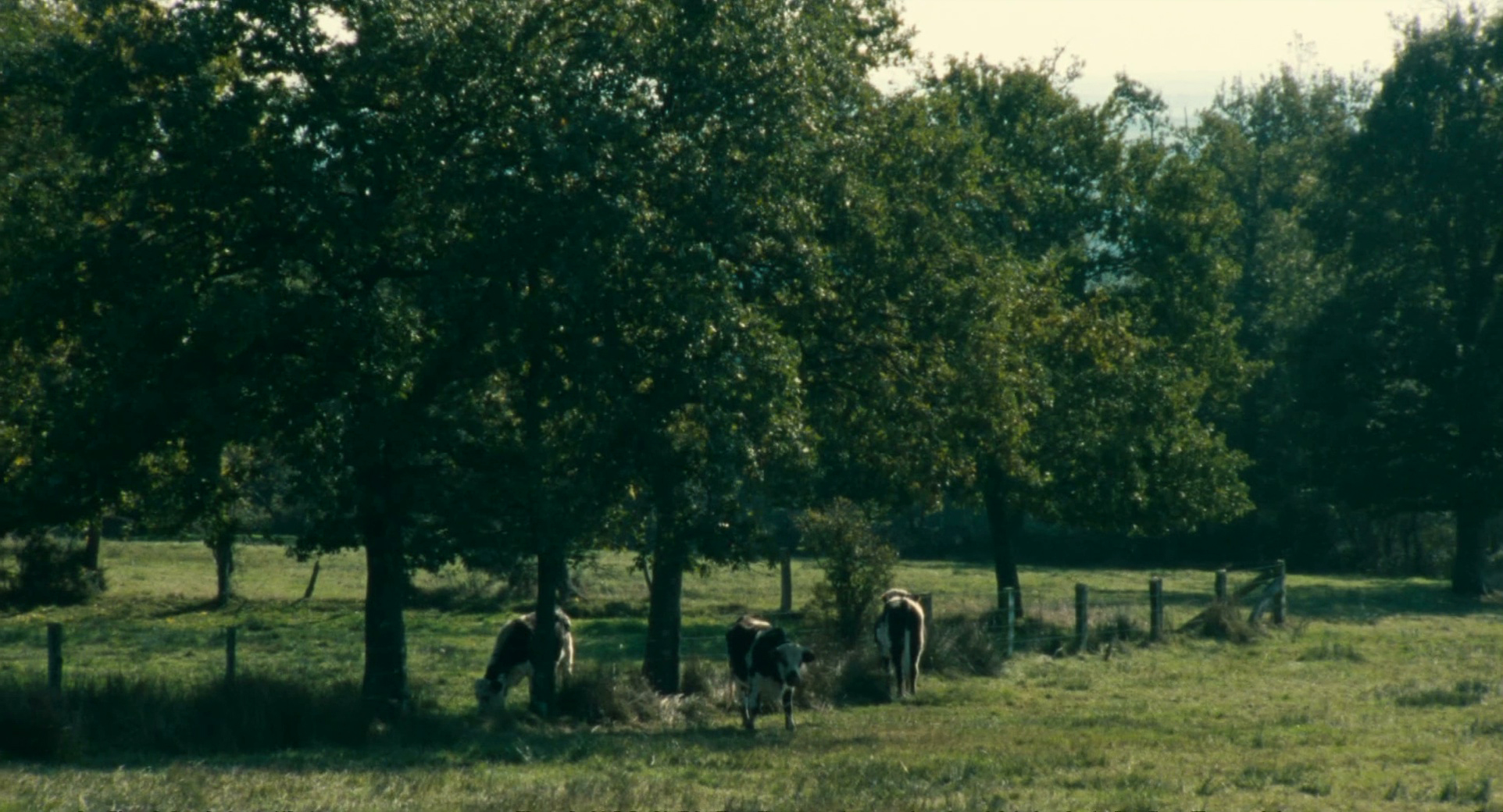
On the whole, my films take their time. I need to stop, to linger. The world moves too fast for me. My shots last longer than is necessary to convey their information. They outlast their subject. Être et avoir doesn’t begin in the classroom. It doesn’t get straight to the point. The film opens in the countryside: there’s a storm, wind, snow, a bewildered herd of cows, their cries, and only then do we enter the classroom. But still no children: first, the tortoises.
Retour en Normandie has an extremely complex structure. The film follows several threads at once. It’s a many-layered affair. To begin with, it interweaves three different periods: the Rivière affair in 1835; the search for actors, locations and funding, and the preparations for Allio’s shoot in 1975; and finally, our reunions thirty years later. Onto these are grafted all sorts of other elements: Nicole’s struggle to regain the ability to speak, Corinne’s illness, the making of cider, the digital revolution at the Éclair laboratories, plans for a nuclear waste burial site, Roger and Caroline’s wedding, the unexpected reappearance of Claude Hébert… In short, a multitude of stories, and a film that draws on an enormous variety of materials: voice-over narration, documents, photographs, film extracts, testimonies, archive material, sequences of direct cinema, and so on.
Grootaers: You mentioned the idea of movement. There’s something very musical about your approach to editing. There’s always this pleasure in approaching editing as a form of composition.
I should talk about the editing of La voix de son maître, because that first experience taught me a great deal. Initially, we transcribed everything the twelve business leaders we’d filmed had said. It came to several hundred pages. We then took scissors and glue and assembled, on paper, what seemed to us the most coherent sequence of material. Then we edited the film according to that structure, only to discover that what had seemed so solid on paper didn’t work at all on screen! It was as though we’d overlooked something essential: that meaning doesn’t reside in words alone, but emerges just as much from the way they’re spoken, from hesitations, silences, slips of the tongue, repetitions, glances, gestures, the way people sit, the way they inhabit a space… So we went back to square one, and I’ve never worked that way again, according to some theoretical structure. These days I edit very intuitively, paying close attention to sound, to noises, intonations, questions of rhythm. I edit with my ears.
9. A Simple Form
Claes: Your approach is highly formal, precise and attentive, yet at the same time it remains very simple, in a sense “accessible”. Is it important to you that your films reach a wide audience? What we find so remarkable about your work is this combination of a very distinctive cinematic approach with a certain accessibility.
I don’t think about the audience. I never sit there wondering what I should do to make a film appeal to people. Once you start making concessions like that, you’re lost. I made Être et avoir in exactly the same way as all my previous films, following my instincts as closely as possible, without the slightest inkling of what was about to happen. No one was more surprised than I was, and I was completely overwhelmed. My earlier films had done reasonably well, but nothing on that scale. Le pays des sourds had attracted just over 100,000 admissions, which was already a considerable success for a documentary on a supposedly difficult subject, but I’d put a great deal of effort into promoting it.
If we knew for certain what made a film successful, that would be the end of everything. Sincerity would go out of the window. It’s not even clear that school is such an appealing subject. The success of Être et avoir has nothing to do with school as a “subject” – here we are again. It’s first and foremost a film about childhood, about the art of growing up. What moved people were the little dramas that unfold in it: Jojo’s antics, Alizé having her rubber stolen, Olivier’s tears, Nathalie’s tears, Julien playing king of the tractor, and then the teacher, not always smiling, rather authoritarian, a little gruff, but sometimes tender and reassuring, who embodies the French republican ideal of public education, of justice, at a time when teachers are undervalued and the school system is fragile, under threat.
Claes: Talking about simple, accessible forms and childhood also makes me think of Abbas Kiarostami’s films: the child’s point of view, a complex simplicity, a cunning innocence, “the wolf in sheep’s clothing”. There’s a clarity in your work that we also find in Kiarostami. The images are very legible, very direct, yet extraordinarily complex.
Grootaers: Take his film And Life Goes On [Zendegi va digar hich, 1992], for example, which opens at a motorway tollbooth. It’s almost as though you’re buying a ticket to enter the cinema, to enter another world. But Kiarostami never underlines the idea. It’s suggested, never explicitly stated. There’s a connection between the two of you. It’s more Philibert–Kiarostami than Philibert–…
Kubrick! [Laughter.] I have a profound admiration for Kiarostami, of course. How could I not? The ambiguity between documentary and fiction, the imaginary and the real, the world of childhood confronted with the adult world, with the brutality of the world, school, learning, landscapes… that art of saying so much with almost nothing. The apparent simplicity and the underlying depth.
This interview brings together two conversations, conducted in Brussels on 17 February 2015 and in Paris on 7 March 2015.
Image (1) from La ville Louvre (Nicolas Philibert, 1990)
Image (2) from Un animal, des animaux (Nicolas Philibert, 1996)
Image (3) from Le pays des sourds (Nicolas Philibert, 1992)
Image (4) from Retour en Normandie (Nicolas Philibert, 2007)
Image (5) from Être et avoir (Nicolas Philibert, 2002)
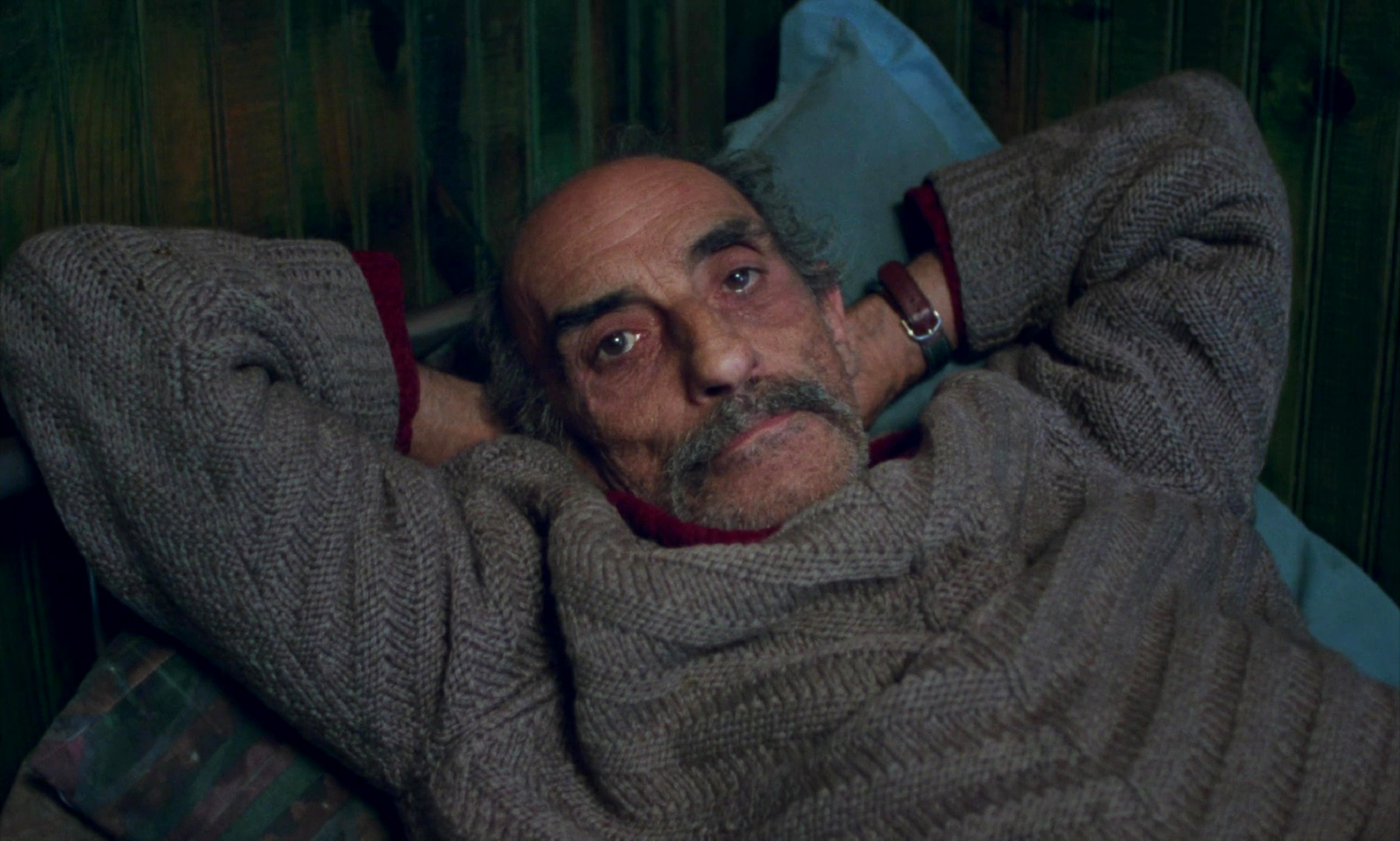
Image (6) from La moindre des choses (Nicolas Philibert, 1997)

