

Neither Message nor Method
A Conversation with Nicolas Philibert
Like a traveller without a clear plan, whose destination only gradually comes into focus, Nicolas Philibert has moved from film to film over the past fifty years. Driven by curiosity and the conviction that every film must find its own path, he’s built a body of work that displays a constant sense of wandering.
He made his debut in 1978 alongside Gérard Mordillat with La voix de son maître, which happened to be a documentary. From this, the desire to make another documentary grew: “then another, and so on up to the present day.”1 And so, film after film, he eventually became a documentary filmmaker, not according to a mapped-out plan but along a path that revealed itself step by step.
That journey took place in his native France. Far removed from anything exotic, he filmed people and places that are at once familiar and yet not really known. As a documentary filmmaker, Philibert does not travel the globe to discover the so-called unknown. Instead, like a nomad, he wanders close to home to discern something new within the familiar. The nomad, as Gilles Deleuze observes in his L’abécédaire, is paradoxically the one who does not travel, who clings tenaciously and refuses to leave. The actual journey unfolds in a movement of thinking, perceiving, and experiencing, in a shift of the gaze.2 And isn’t that, ultimately, what cinema is capable of? To be, as Dirk Lauwaert so beautifully put it, “moved unmovingly”?
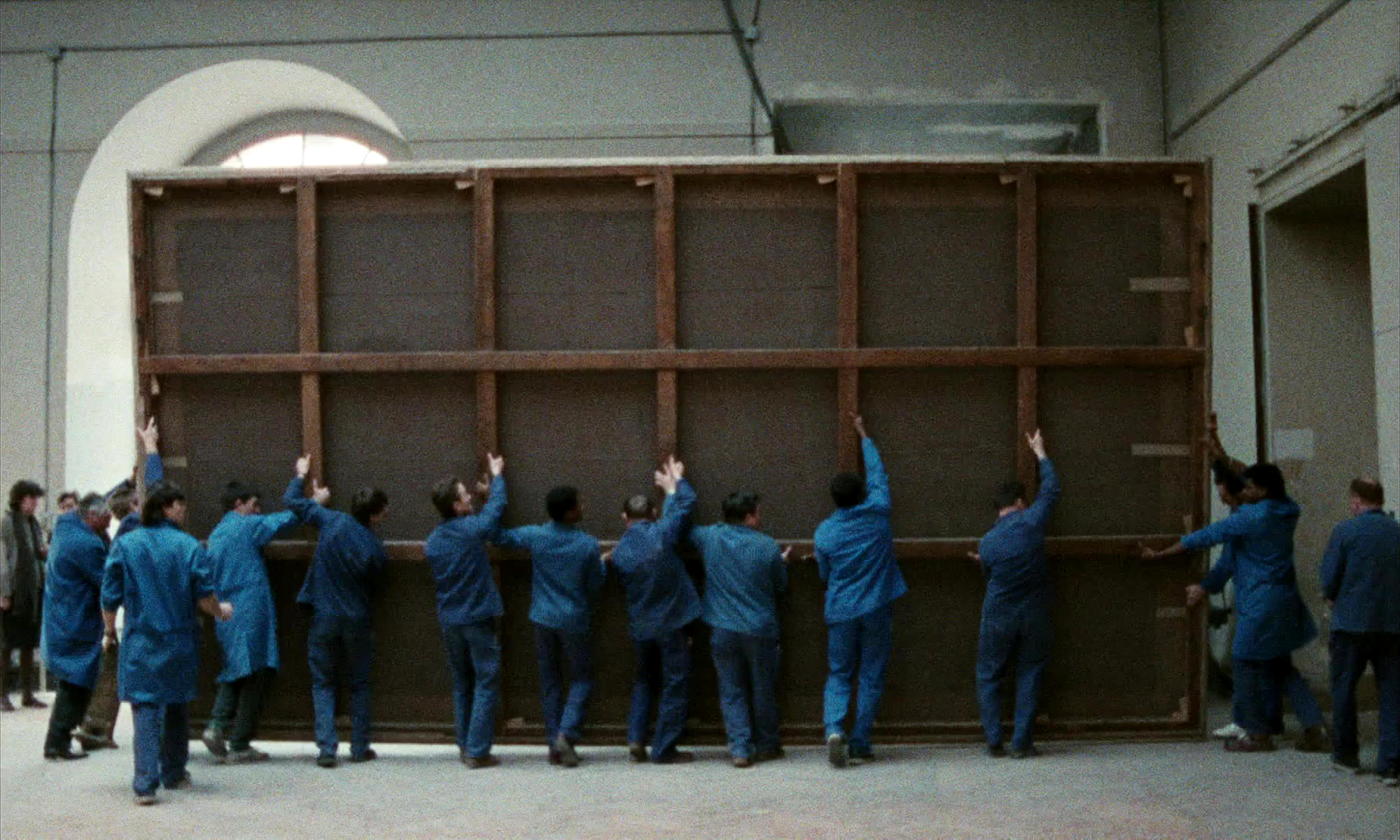
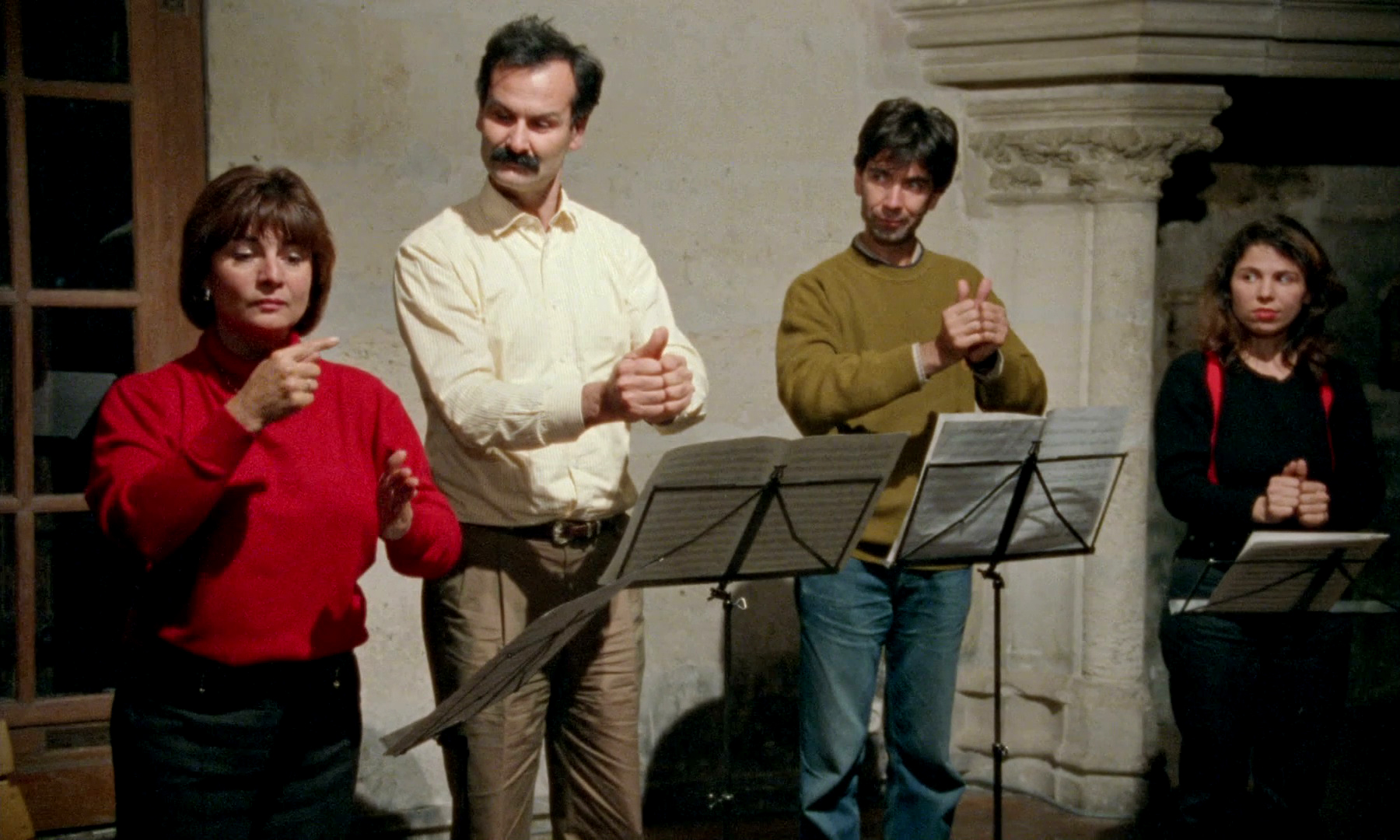
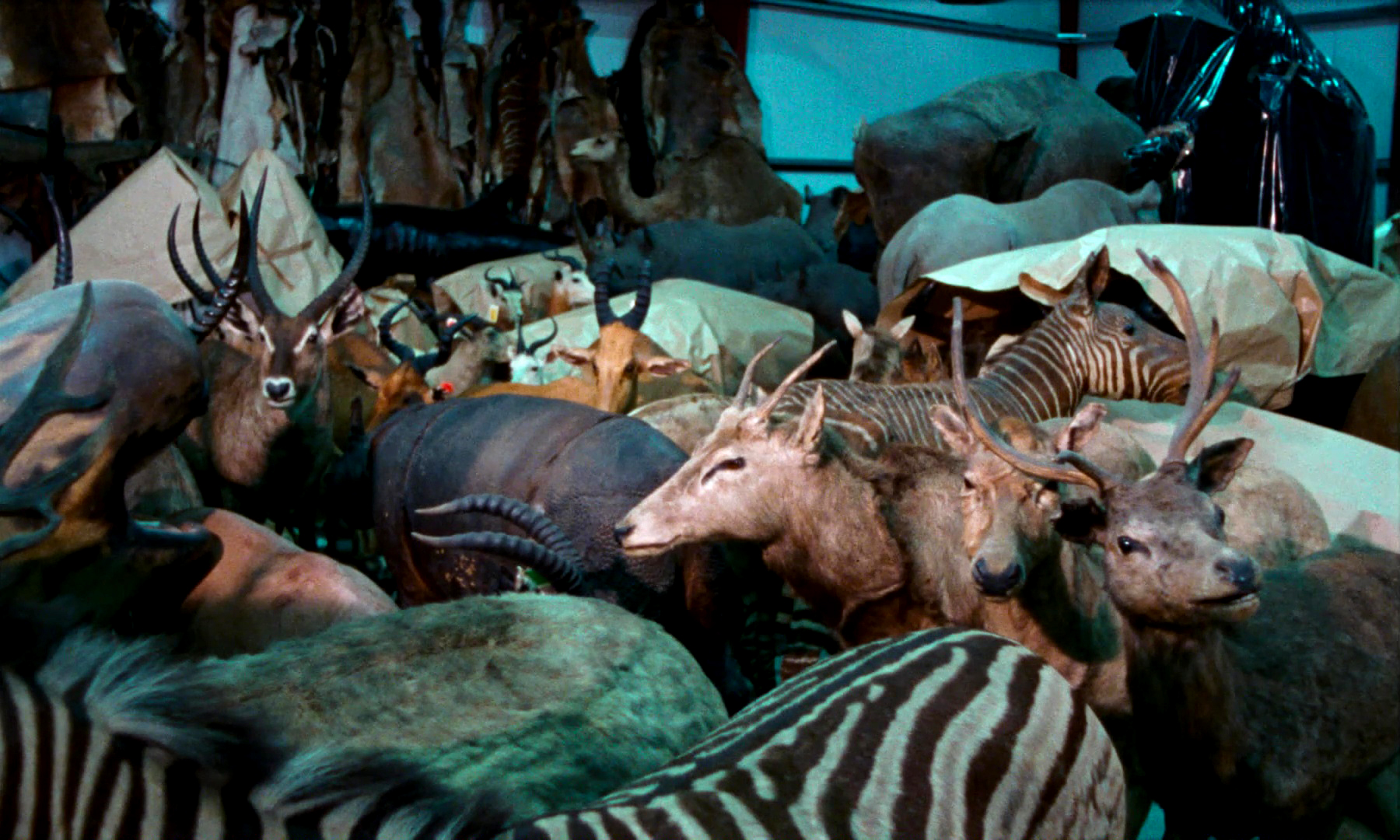
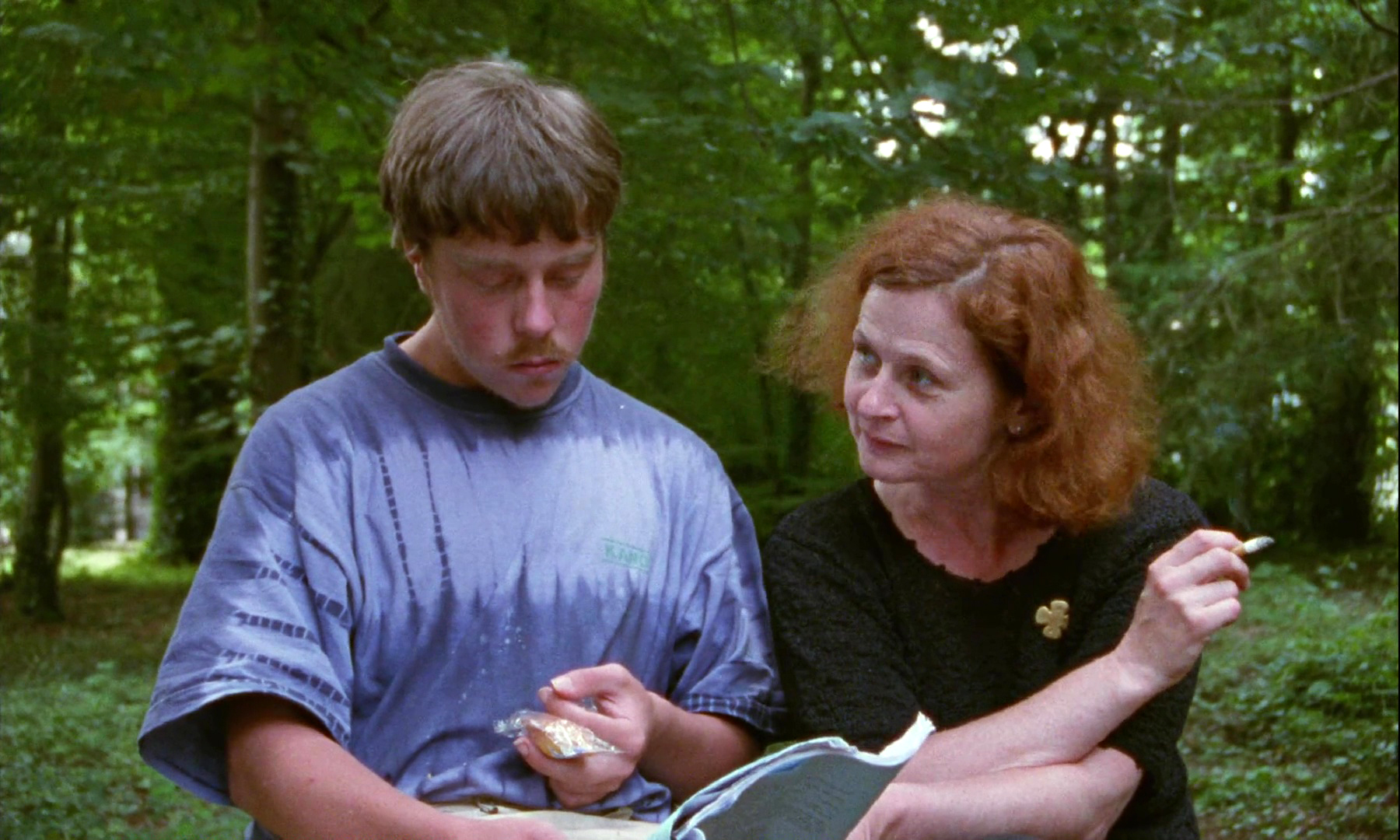
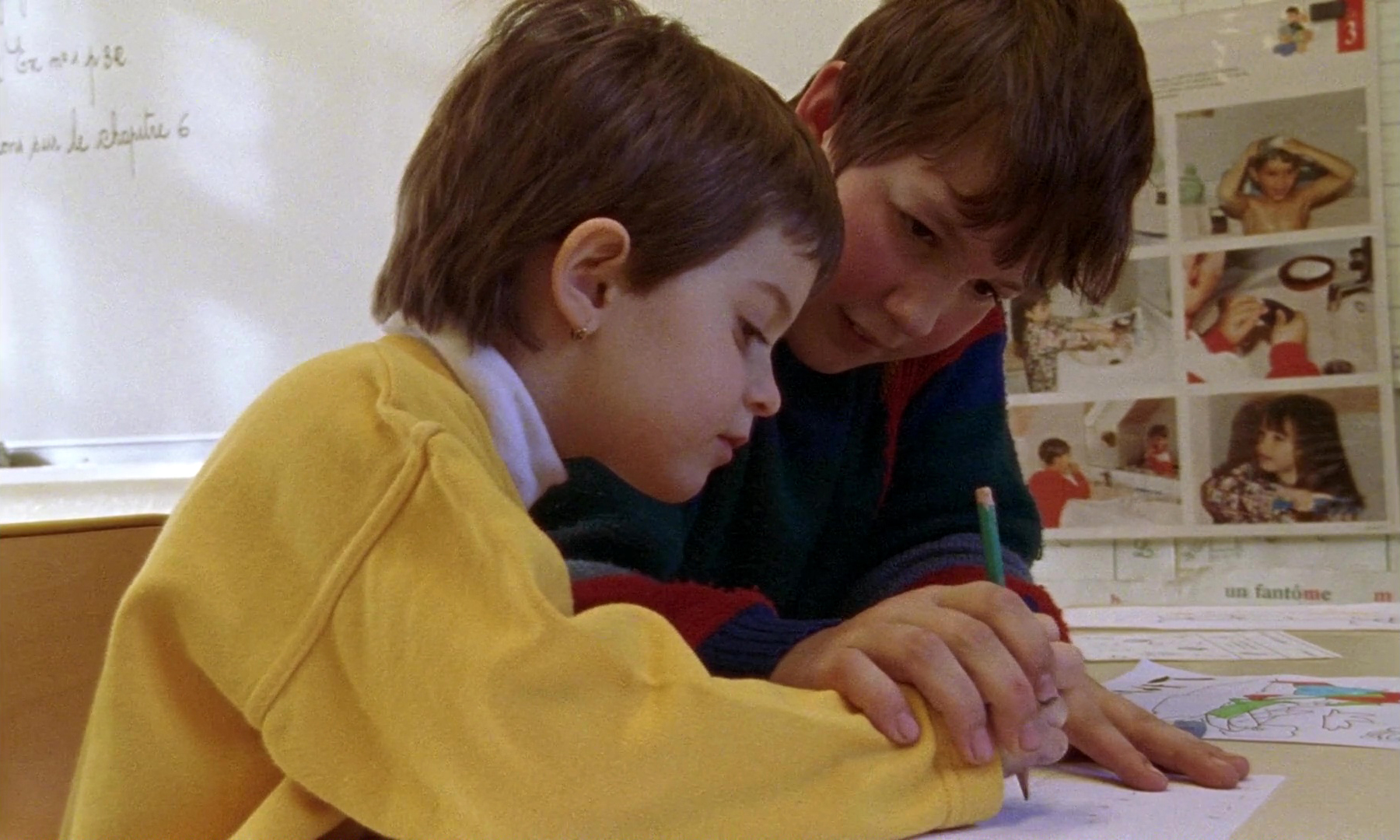
Philibert’s films are often set in institutions such as schools, museums, psychiatric clinics, or radio studios. Yet these settings are never the actual “subject”. Rather, they provide an opportunity to show people grappling with difficulties that they will try to overcome. From the behind-the-scenes work at France’s most famous museum in La ville Louvre (1990) and the renovation of the Galerie de Zoologie du Muséum national d’Histoire naturelle in Un animal, des animaux (1996), to the children learning to read and write in Être et avoir (2002), and the residents of the La Borde psychiatric clinic preparing a theatre performance in La moindre des choses (1997), to the bustling hive that is La maison de la radio (2013), or the inhabitants of Le pays des sourds (1992), who experience the world according to a different sensory order, in each case, the focus is on a small community that, whether working, learning, or providing care, strives to accomplish a shared task. At the same time, Philibert turns his gaze to what usually remains hidden from view: not the Louvre as a museum but the work that makes it possible; not psychiatry as an institution but the daily life that unfolds within it.
In the spring of 2015, Philibert came to Belgium to discuss his work with film students at KASK in Ghent. During that visit, we met with him in Brussels for an in-depth interview, with the idea of publishing it on Sabzian. A few weeks later, we travelled to Paris, where he warmly welcomed us and took the time to answer even more questions. We will soon have the pleasure of welcoming Philibert back to Brussels, this time for Sabzian’s State of Cinema. It seemed to us that this was an appropriate moment to finally transcribe, edit, and publish this conversation, which took place nearly twelve years ago. The temporal distance has naturally led both us and Philibert to revisit the questions and answers, edit them, and elaborate on them where necessary. Since the conversations took place in 2015, his later films such as De chaque instant (2018) and the subsequent trilogy he filmed in psychiatric settings – are, of course, not discussed.
This in-depth conversation is first and foremost the result of our great admiration and love for Nicolas Philibert’s cinema. At the same time, his work touches on questions that are also central to our own practice as filmmakers. As a documentary filmmaker, how do you reconcile a strong focus on cinematic form with an openness to reality? For us, Philibert’s films are an extraordinary testament to that question, to a patient and careful relationship with the world, in which people, places, and situations are given the time to emerge on screen, while also demonstrating great formal precision, with particular attention to light, colours, patterns, and planes.
In this interview, which will appear in two parts, we speak with Philibert about his first steps in the world of cinema, his discovery of documentary filmmaking and the prejudices and expectations that accompany the “genre”; about the various stages of the filmmaking process, the writing and financing, the shooting period and cinematography, sound and editing; about the constant interplay between chance and mise en scène; about the joy of cinema, our shared love for the films of Johan van der Keuken and about Herman Slobbe, that “sweet form.” But even more than that, we talk about a documentary cinema that cannot be pinned down to a single subject or message, that goes beyond an intention, or wanting to say [vouloir-dire], and that is by no means a simple, repeatable method that approaches reality through knowledge and competence, a savoir-faire.
To keep his films alive, he writes, he must remain off-balance. His films do not arise from a predetermined blueprint but from encounters, coincidences, and unexpected twists. They grow without a detailed plan, sustained by a deep trust in the present and in what emerges during the process of making, a journey in which he is confronted time and again with the particularity of people, places, and situations. The only knowledge that can emerge from this is that of the fleeting moment when the filmmaker and the other touch one another. What ultimately remains is the film, the careful trace of that encounter.
Gerard-Jan Claes
Part One
1. Beginnings: Documentary Cinema
Elias Grootaers: Let’s start at the beginning. How did you find your way into cinema, and more specifically into the world of documentary filmmaking?
Nicolas Philibert: I can hazard an explanation when it comes to cinema in general, but documentary is much more of a mystery. Grenoble, the city where I spent my childhood, was a cultural desert when I was growing up. My father was a teacher – he taught philosophy – and belonged to a generation that moved heaven and earth to provide the city with proper cultural facilities. Their efforts bore fruit in 1968 with the opening of the Maison de la culture [now MC2], one of the first cultural centres of its kind in France. He was also a serious cinephile. For many years he ran the Grenoble film club, before going on to give a public lecture series on the art of cinema, open to everyone, in a large auditorium in the city centre. Each week he would screen a film and offer an in-depth analysis of it. Antonioni, Dreyer, Chaplin, Bresson, Rossellini and Bergman were among his favourite directors. His reviews appeared in a fairly serious regional monthly, Les Cahiers de l’Alpe. They were wonderfully substantial pieces. I must have been twelve or thirteen when I first attended one of his lectures. Was the film by Bergman? I have a vague memory of voices speaking a Nordic language, but that’s about all I can recall. I hadn’t understood a thing.
For me, cinema was first and foremost a way of travelling, of discovering distant landscapes and unfamiliar faces, hearing foreign languages and new sounds. My parents didn’t have a television, and cinema opened up the world to me. At the time, I had no chance of getting into film school. There were only two in France, both in Paris: IDHEC – now La Fémis – and the École Louis Lumière. To sit the entrance exams for either of them, you needed to be good at maths, physics and chemistry, which I wasn’t. My only option was to find work as a trainee on a film, which I managed to do in the summer of 1970, when I was taken on for René Allio’s Les camisards. So I started right at the bottom, as a trainee in the art department, then working with the grips, and finally with the props master. I was nineteen.
When I started out, it was fiction that attracted me most. Yet the first film I wanted to make was a documentary, La voix de son maître, which Gérard Mordillat and I directed together. Strange, really, because I knew next to nothing about documentary and had seen very few of them. Unlike today, documentaries were rarely shown in cinemas. As a child, I’d seen Le monde du silence [1956], by Louis Malle and Jacques-Yves Cousteau…
Grootaers: The only documentary ever to have won the Palme d’Or.
Yes, until Fahrenheit 9/11 [Michael Moore, 2004]. Later I’d see Jean Rouch’s La chasse au lion à l’arc [1967], L’amour de la vie [1969], a portrait of the pianist Arthur Rubinstein by Gérard Patris and François Reichenbach, Nuit et brouillard [Alain Resnais, 1956], extracts from Nanook of the North [Robert Flaherty, 1922], and a film by the Swiss director Richard Dindo that made an enormous impression on me: L’exécution du traître à la patrie Ernst S. [1975].
When Mordillat and I began shooting our first film, I had no long-term vision, no thought of devoting myself to documentary filmmaking. But during that first experience, I began discovering other filmmakers: Frederick Wiseman, whose films were starting to circulate in France, Johan van der Keuken, Pierre Perrault, Chris Marker, Agnès Varda, Raymond Depardon… Through their work, I came to appreciate the sheer breadth of the documentary continent, the diversity of approaches, modes of expression and styles it encompassed. I became fascinated by this form of cinema, still very much a minority pursuit, widely underestimated and yet so extraordinarily fertile. That fascination has never left me. After making that first film, I wanted to make another, then a third… And so it has gone on, right up to the present day. People often ask me, “But what about fiction? Have you never wanted to make a fiction film?” My answer is always the same: “That’s all I ever do.”
In 1980, I came to Brussels for a few days at the invitation of the Centre Bruxellois de l’Audiovisuel, which had opened a year or two earlier. Its director, Kathleen de Béthune, had organised a gathering of documentary filmmakers: Henri Storck, Robert Kramer, Frederick Wiseman, Johan van der Keuken, Boris Lehman, Richard Dindo, Marceline Loridan-Ivens, Gérard Guérin, Jacques Leduc from Quebec, Gérard Mordillat and myself. The idea was to record our conversations for publication, but I hardly said a word. I was the youngest, I’d only made one film, and I was intimidated. I recently came across a transcript of those discussions, and sure enough, I barely contribute. Wiseman doesn’t say much either. It clearly wasn’t his thing. It went on for three days: three days talking about cinema and politics. You don’t forget something like that.
Grootaers: You studied philosophy. Did those studies help shape both your love of cinema and your attentiveness to the world – your “documentary” sensibility?
Before devoting myself entirely to cinema, I did indeed take a degree in philosophy. I’d worked on Les camisards in the summer of 1970, after my first year at university, but when the shoot was over, I went back to Grenoble to continue my studies. I’d loved the experience, but I was hesitant about pursuing it. I couldn’t imagine myself making films. It seemed beyond my reach, something unattainable. I was convinced that to make films you needed to know not only film history and the technical side of filmmaking, but also semiology. So I struggled through all these terribly difficult books, which I found incredibly boring. Then, after completing my philosophy degree, I was hired as an assistant in the art department on a film, before becoming an assistant director. After two or three years, I realised that all the theoretical knowledge I’d thought indispensable wasn’t necessary after all, and that filmmaking was something concrete, something you learned by doing. So did my studies nurture my interest in documentary? Probably, but I couldn’t tell you how. Influences are often hard to pin down.
Gerard-Jan Claes: What did you discover in the work of Johan van der Keuken and Frederick Wiseman that proved important to your own approach to filmmaking?
With Van der Keuken, what immediately struck you was his inventiveness, the sense of freedom his films exuded. He had his own distinctive way of exploring the world through his personal experience, of combining the intimate and the universal, constantly connecting the near and the far, the small and the large, whether he was depicting a city (Amsterdam), portraying a little girl [Beppie, 1965] or recounting a journey. He threw himself bodily into his films, made extraordinary connections between things, and somehow made it all swing. Discovering this was tremendously exciting, because until then documentary still had a certain rigidity about it: its didactic function all too often took precedence, which was why people said it wasn’t cinema. But van der Keuken broke down every barrier. He was a brilliant editor. He could make his images dance, run jazz throughout an entire film if he felt like it, as he did with Lucebert [Een film voor Lucebert, 1967].
Wiseman was something else again. He was doing what many of us dreamed of doing but knew was impossible in France and elsewhere in Europe: filming inside major institutions. Over here, they were closed off to us. They would never have dreamed of letting a film crew through the door. Gradually that would change, but it took time. Then there was Wiseman’s refusal to use voice-over commentary. Today that seems unremarkable, but it certainly wasn’t at the time. Wiseman’s films showed things without setting out to prove a point. They allowed viewers to think for themselves, without dictating what they should think. In the 1970s, when a certain kind of militant cinema was flourishing, Wiseman stood apart. He depicted social relations in all their complexity, human behaviour in all its ambiguity, without ever passing judgement or lapsing into caricature. Take Juvenile Court [1973], his film about the juvenile court in Memphis. Wiseman never lays it on thick, never tries to cast the judges in a bad light or portray them as villains. By presenting situations in all their complexity, he makes us think, and ask ourselves: what would we do in their place?
Grootaers: Do the clichés surrounding documentary cinema – the idea that it’s too serious, didactic, weighed down by commentary – and its poor reputation largely stem from television?
Television certainly hasn’t helped, but I think the problem goes back further than that. Before television became a fixture in people’s homes, when you went to the cinema, instead of the trailers and advertisements we have today, you’d first get the Pathé or Gaumont newsreels – a sort of filmed news bulletin about the latest fashion show, film stars, the Tour de France, the Bastille Day parade… Then, after the newsreels, there would be a short documentary on something like sardine fishing or the Chartres Cathedral, accompanied by a pompous, academic voice-over. That did enormous damage to the reputation of documentary. There was a derisive term for this sort of thing: docucu. Today, “documentary” has become a catch-all, encompassing everything from the most run-of-the-mill TV reportage to the most sophisticated auteur films, by way of so-called “docudramas”. You constantly have to make distinctions.
Claes: And haven’t labels such as “cinéma vérité” or “direct cinema”, and the confusion they’ve generated, also contributed to this image of documentary?
I’ve never really understood what “cinéma vérité” was supposed to mean. I have the impression that for Edgar Morin, who coined the term, it was a kind of verbal sleight of hand: it raised questions about cinema’s relationship to reality without actually claiming that cinema was truth. As soon as the expression appeared, it gave rise to all sorts of misunderstandings.
Grootaers: Yes, at the beginning of Chronique d’un été [Jean Rouch and Edgar Morin, 1961], the founding film of cinéma vérité, and the first in which the term was used, Jean Rouch, Edgar Morin and Marceline Loridan-Ivens, who conducts the interviews in the film, have a conversation in which they explicitly dismantle the idea that you can show reality as it is.
Claes: They discuss the effect of the camera’s presence and the role of editing as a process of selection. In talking about the film, they even ironize their own methods. It ends with a scene in which the participants watch themselves on screen and discuss with the filmmakers whether their behaviour and what they said were “true” or “authentic”.
But I’ve always found the notion of “direct cinema” ambiguous too. When it emerged, with the advent of lightweight cameras and synchronised sound, the term made sense as a way of distinguishing this new filmmaking from what had come before. But looking back, we know perfectly well that documentary, so often described as “direct cinema”, is nowhere near as direct as it appears. Just ask Wiseman what he thinks – he can spend a whole year editing a film.
2. Institutions, Places, Social Worlds
Grootaers: Like Wiseman’s, your films are also consistently concerned with institutions, though in a very different way. Perhaps “institutions” isn’t quite the right word; perhaps we should speak instead of “places” or “social worlds”. In your films, there’s a sense of encountering a “community”, of arriving as a visitor who is somehow admitted into its intimate life.
For me, it’s less a matter of describing institutions in detail than of using them as settings for my films and trying to capture their atmosphere. La moindre des choses is a good example. Filming the rehearsals for a theatrical production involving both patients and staff already told us a great deal about the La Borde clinic, without my having to explain the fundamental principles of “institutional psychotherapy”. The same goes for La maison de la radio: we see snippets of broadcasts, musicians rehearsing, a radio drama being recorded, journalists sorting through the news, reporters out in the field… all woven together in a succession of sequences that convey both the extraordinary diversity of the programmes produced there and a certain ethos: a commitment to high standards, an openness to the world, the importance attached to speaking and listening. Wiseman might perhaps have been tempted to film the administration and the institution’s budgetary difficulties as well… But never mind! Such institutions always offer us a chance to immerse ourselves in the human comedy.
Grootaers: The idea of the human comedy also has a theatrical dimension: seeing the world as a stage, a world within a world?
Let’s say that institutions bring into focus all kinds of social relations, from the most discreet to the most volatile. For my part, I choose to film places and situations in which people find themselves facing difficulties, having to overcome obstacles or carry out tasks, individually, collectively, or both. From a narrative or dramaturgical point of view, this is always immensely fruitful: the effort involved lends dignity to the people being filmed, brings us closer to them; we find ourselves rooting for them. I think of the children in Le Pays des sourds, who struggle so hard to learn to speak, or those in Être et avoir; of all the work we see being done by the staff of the Louvre [La ville Louvre] and the Gallery of Evolution [Un animal, des animaux] – the alterations, restorations, installations and hangings; of the play that the residents and staff of La Borde prepare together [La moindre des choses]. From one film to the next, I dwell on individual situations, allowing characters to emerge, but I never present them as isolated figures. They are always part of a collective, engaged with it, with others, constantly interacting. What interests me is this relationship between the individual and the collective; the idea that a collective can only exist if it accommodates differences, singularities, within itself. That’s my way of making political cinema. Film after film, I explore difference and diversity in all their forms. But mind you, a collective is not the same thing as a community. The word “community” suggests the opposite: a retreat into identity, a world closed in on itself.
Claes: Wiseman answered the same question by saying that filmmaking is difficult, and that he needs to confine his films to the space of an institution in order to be able to work and make progress.
An institution, or simply a place. Exploring a place can itself become the subject of a film, replacing the very notion of a subject, which so often gets in the way. Provided, of course, that the film’s spatial and temporal boundaries are clearly established. The problem comes when you want to venture beyond them. During the shooting of La maison de la radio, I hesitated: should I remain inside the building, or could I follow a reporter outside, into the field? Wouldn’t that undermine the film’s coherence, its underlying concept?
“The subject… or how to get rid of it”, as Jean-Louis Comolli jokingly put it. I’ve often said that I couldn’t define the “subject” of La moindre des choses, because it’s not a film “about” La Borde, but a film “at” La Borde.
Grootaers: Van der Keuken also grapples with this question in his work: what constitutes the film’s “frame”? In a sense, it’s always a little bit of “everything”, the whole world. He films in one place, then suddenly goes somewhere else, as in his short film Herman Slobbe / Blind Kind 2 [1966], leaving his original “subject” behind. With him, it’s much harder to establish where the boundaries of the “subject” lie.
Audiences need points of reference. If a film strays outside its own frame, they can turn on you. Halfway through Être et avoir, I unsettle them a little: an interview with the teacher, speaking directly to camera, breaks with everything that has gone before, as though the film were suddenly stepping to one side. It’s a small thing, but some people criticised me for it. In Retour en Normandie [2007], I begin by tracking down the farmers who played the leading roles in Moi, Pierre Rivière, ayant égorgé ma mère, ma sœur et mon frère… [1976], René Allio’s film on which I’d worked as an assistant in 1975. For the first fifty minutes, the film stays on course, then it begins to turn, slowly drifting away from its original bearings, putting some distance between itself and the evocation of the past, as though wandering away from its own subject… Only to return to it in the end.
3. A Thread, a Subject
Grootaers: There’s this idea of the “collective” in your films, often situated in a particular place. But can we also speak of a thread running through your work? Not a theme or a message, but rather an affinity or tone, like a tuning fork that accompanies you through the process and helps you move beyond immediate reality, helps you make choices. As filmmakers ourselves, it’s something we often talk about: a tone that allows freedom to improvise, as in jazz, where you begin with a theme and then break free of it.
I like the idea of a tuning fork, but what exactly do you mean by a “thread”?
Claes: In fiction filmmaking, a director has more control over the underlying thread. But in documentary, you first have to choose a world to enter.
Grootaers: You enter a world with your own tuning fork. Then there are other people’s tuning forks, and immediately it becomes a question of attunement, of relationships, tensions, sometimes harmony…
My films have things in common, inevitably. I can’t help that. You can discern a certain tone, a “thread”, as you put it, but I’d rather not think about it too much. You’re always caught between the desire to do something new, to surprise yourself, and the wish to remain faithful to who you are, to your convictions, your approach, your way of working. To keep moving forward, it’s better to preserve a certain freshness, maintain a little distance, keep your own work somewhat out of sight, even from yourself.
Claes: So it doesn’t become a mannerism…
Audiences also judge your work in those terms. If you do something very different, some will say, “That’s not what we expected from him”, but if you do something too similar, the very same people will say, “He always does the same thing.” So you might as well shut all that out and make the films you want to make. I’d like to read you an extract from an interview René Allio gave to France Culture, in which he discusses the question of the “subject”. By way of background, Allio came to filmmaking relatively late, at the age of forty. He began as a painter, then became a theatre designer, creating sets and costumes. He worked for some of Europe’s leading stages: the Royal Shakespeare Company in London, La Scala, the Comédie-Française, the Paris Opera…
[He opens a small notebook and reads.] “When I moved into cinema” – this is Allio speaking – “the last thing I wanted was to be the successful theatre designer who decides to start making films and produces beautiful cinema, just like that. I wanted to anchor all my work in an aesthetic other than that of the image: the aesthetic of narrative, which meant the subject matter. And at the time I did indeed believe there were good subjects, subjects worth tackling. Since then, I’ve learned that a good subject is one that allows you to question yourself through the art you practise, one that challenges you, calls you into question. So a good subject isn’t necessarily a different subject every time. And this is where Cézanne and Ozu come in. For Cézanne, the good subject was Mont Sainte-Victoire. I don’t know how many times he painted it. And each time he painted Sainte-Victoire, he was questioning all the Sainte-Victoires he’d painted before, questioning painting itself. Ozu, too, has two or three themes that provide the basic framework for his stories, his narratives, and he keeps returning to them. Each time, he returns because he knows perfectly well that what matters isn’t so much what you’re talking about, of course, but how you talk about it.”
Claes: Speaking of “subjects”, you always film in France. Even the name of the production company you work with, Les Films d’Ici – “Films from Here” – seems appropriate. Is filming close to home a deliberate choice?
You don’t have to travel to the ends of the earth to find interesting stories. You just have to look around you. Besides, I refuse to believe that there are “good” subjects and subjects that aren’t good. That’s precisely Allio’s point. What is a good subject? One with commercial potential? Something fashionable? There may be “great” subjects, but we all know that a great subject doesn’t necessarily make a great film. What matters isn’t so much the subject as what you do with it. It’s the subject that chooses you. Something haunts you, won’t let you go. “If you have to go looking for a subject, you might as well stay at home. You should only make films that are necessary”, as Truffaut said. For me, what matters far more than having a “subject” is having a “project”: the promise of something, an encounter, a question I want to confront. It’s a question of trust.
Grootaers: If it isn’t a question of “subject”, how does that translate into the practical business of directing and producing a film? After all, funding applications require you to define the “subject” clearly and submit a script, to make the film intelligible in advance. The absence of a script is often taken as a sign of indolence, even laziness. Yet a film can come into being in all sorts of other ways: through an approach, a relationship, an encounter, an image… How do you write about a film at such an early stage if you want to preserve the possibility of the unexpected?
That’s precisely the problem, especially as funding committees demand ever more detailed director’s statements. They may even ask for a scene-by-scene outline, a list of the sequences you envisage shooting, which is absurd. So far, I’ve been fortunate enough to avoid that. Perhaps my years of experience count for something… My director’s statements are generally quite short, but I work on them very carefully. I can spend three months writing fifteen pages. That’s when I define the film’s concept, its underlying principles, its tone.
When I’m writing, I don’t yet know who the people in the film will be; it’s too early for that. So sometimes I invent characters. There’s an element of strategy in it, of course: it makes the text more vivid. But in fact it goes deeper than that. In the statement of intent for Le Pays des sourds, I described about ten characters, almost all of them invented. Yet as the shoot approached, I found myself looking for people who resembled those I’d imagined. It was the same with Être et avoir. I wrote the proposal before I’d found the school. I’d visited five or six, and on the basis of those initial scouting visits I sketched a portrait of a school, borrowing elements from one or another and adding things I’d invented. Then, in the same way, I went looking for a school that resembled the one I’d described.
In my project proposals, I never try to give the impression that I know more than I do, that I have complete command of my subject. Quite the opposite: I’m perfectly willing to acknowledge my doubts, the unresolved questions that will help shape the project and fuel my desire to make the film. It’s risky, but so far it’s worked for me. In the director’s statement for La moindre des choses, I question the very idea of the film, whether it is justified: “A film about mad people? What right do we have to turn suffering into spectacle?” I identify the traps, the pitfalls, the dangers: the picturesque, the folkloric, fascination, condescension, the exploitation of vulnerability; all the scruples that hold me back even as they sharpen my desire to overcome them. The film itself will ultimately be a private reckoning with these questions.
Claes: You often speak of “programming chance”. What do you mean by “programming”?
“Programming” might sound a bit strong, but let’s say it’s about creating the conditions for things to happen in front of the camera, for the people we’ve come to film to feel encouraged, to want to join in the dance. Let’s call it an atmosphere of trust. But it remains fragile, highly unpredictable, and requires you to be inventive, to be able to change tack, to improvise constantly. “Programming chance” is an oxymoron. It was Jean Oury, the founder of La Borde, who coined the expression to describe what they do there: a sort of wager on the unexpected, an approach to welcoming residents that operates on all sorts of levels, through different structures and arrangements, endlessly multiplying the conditions that might one day – who knows? – allow a word to be spoken, a sudden awakening, an encounter, even in the gaps between things, even in a doorway.
Grootaers: This idea of improvisation brings us back to something you mentioned earlier: making a film not “about” people but “with” them. What does this “with” mean?
It means that I don’t make films from a position of superior knowledge, looking down on things. It means that the very subject of the film… is the film itself. It’s the encounter. My films have no didactic purpose. They’re not intended to instruct, but to invite people to share an experience. You may learn things along the way, but that’s not the original aim. That’s not what interests me. I do as little research as possible beforehand. I need to preserve my appetite for the shoot. If I know too much before I start, I lose the desire to make the film. Shooting is the moment when I slip into a place, meet the people there, try to spend some time alongside them, see whether we have things to say to one another, things to share.
To put it another way, I don’t like shooting simply to get the material I need, following a programme or a shooting schedule. Fiction is different, with all its complicated organisational demands. For the kind of films I make, I need to construct the film in the present moment of the encounter, out of what happens between us, rather than according to some pre-existing scheme. In documentary, the most beautiful things are often those that haven’t been planned. That’s sometimes true of fiction too. Suddenly there’s a moment of grace. Something unforeseen happens, something extra, almost like a gift. You have to try to remain receptive, to make yourself available for such moments.
Grootaers: This “with” implies a collective, working “with” people. But can it also mean working “with” things, with the materiality of what you’re filming? A hand, a face, a colour, a flowerpot… Is that also what the title La moindre des choses suggests?
Yes, La moindre des choses was partly about that: paying attention to bodies, faces, gestures, objects, all the little things. A raised voice, a fragment of a sentence, the wind, the rain, chairs, trees, I don’t know. It’s pragmatic, it’s concrete. You don’t make a film out of grand ideas, or if you do, you risk placing yourself above the people and things you’re filming.
4. Shooting
Claes: You approach filming without preconceptions, yet at the same time your films display an extraordinary formal rigour. How do you manage to retain an overall vision during the shoot? In La ville Louvre, for example, there are observational scenes and a few in which you asked people to repeat certain gestures or actions, to open a door, walk around, and so on. How do you identify what you need while you’re filming?
I shoot instinctively, by feel, improvising a great deal. As I’ve already suggested, I don’t have a shooting schedule. I rarely know what I’m going to film the next day. The Louvre is an enormous place; you can get lost in it. Some days we’d set off on an adventure, exploring a particular wing or department, and we’d stumble across something that caught our interest: a picture-frame gilder, an installation, a couple of acousticians carrying out tests by firing gunshots, some employees playing pétanque during their break… I’d push open doors, poke my head round and ask, “Hello, mind if we come in and see what you’re doing?” Nobody was breathing down our necks. We had complete freedom. I was incredibly lucky. I don’t think it would be possible today.
Shooting doesn’t mean amassing as much footage as possible and telling yourself, “We’ll sort it out later.” Even if you don’t know exactly where you’re heading at first, as the shoot progresses you begin to see the bigger picture, to make connections. One idea leads to another, you start piecing together a narrative, thinking about structure, about editing. Some avenues you abandon along the way, others you develop. And that’s when you might ask someone to perform – or repeat – an action, follow a particular route, take an object back to the storerooms. Ah, here’s an idea: let’s ask this woman whether she’d mind us filming her journey through the bowels of the Louvre. And since she’s agreed, let’s ask her whether she’d mind wearing her high heels – yes, the ones she had on the other day. That’ll add something interesting to the soundtrack.
So I do occasionally ask people to repeat things, or engineer a situation, but it doesn’t happen very often. There are purists who think it’s scandalous, but I couldn’t care less. Of course, it all depends on the context, on what you’re asking someone to repeat, when, how and why. Sometimes situations repeat themselves without any intervention on your part. The children in Être et avoir didn’t learn to read in a day. If I missed something, reality gave me a second chance.
Being filmed changes people’s behaviour. Some are intimidated by the camera, others become excited or energised by it. Often, the people being filmed do what they imagine the filmmaker wants them to do. There’s an implicit element of self-staging. People offer you things; they can become inventive in front of the camera without your having said a word. The teacher in Être et avoir conducted himself in the classroom according to what he thought the film required of him. In La ville Louvre, the curator of paintings, realising he’s being filmed, suddenly performs a pirouette like a ballet dancer; the removal men cast glances at the camera. There’s a sense of complicity. They’re happy to be filmed and they let us know it, they play along with us.
So documentary filmmaking isn’t simply a matter of recording what exists. It’s about “waiting for something to happen, something you may have prepared for, or that may come about without any preparation”, as Comolli put it. And he added: “Belief in cinema is a metaphysical position.”
Claes: In La ville Louvre, you worked with several camera operators.
One after another, not simultaneously. For the first three weeks, I shot continuously. After that, I was only filming one or two days a week, but because the shoot stretched over five months, the camera operators weren’t always available. Altogether I worked with five different operators. I spent the first week with Richard Copans, but he couldn’t continue, so I had to find someone to replace him, who in turn had to be replaced. They didn’t all have the same skills. There were things I could ask one of them to do but not the others: shooting handheld, in very low light… I did the best I could, making use of each person’s particular talents. The one constant was the lens. I shot the entire film on a 12mm lens. It allowed me to capture the museum’s vast spaces. If I wanted a tighter shot, we moved closer.
Grootaers: When did you decide to take up the camera yourself?
It happened out of necessity, during the shooting of Un animal, des animaux. Frédéric [Labourasse], the camera operator I was working with, had to leave the film almost overnight. At first I thought I’d find someone to replace him, but nobody I knew was available. So who could I turn to? In documentary, you need enormous confidence in someone to entrust them with the framing. If you’re constantly having to whisper instructions in the camera operator’s ear instead of allowing them freedom of movement, it quickly becomes unbearable for everyone. Caught off guard, I decided to give it a try. I brought in an assistant and began operating the camera myself. Katell [Djian] handled the focus and lighting. She had a great deal of experience, so I could relax: she made up for my technical shortcomings.
I immediately took to filming, so much so that we worked together again on the next film [La moindre des choses]. In the setting of La Borde, it seemed important to me to retain control of the framing, that boundary between what is in and out of shot, between the visible and the invisible; to resist the temptation to show everything, because I sensed that this resistance was precisely where the film might take shape. And holding the camera would help me approach people. It was like a little suit of armour. It would protect me. I’d be less afraid. Since then, I’ve never looked back. I’ve continued to operate the camera myself. It allows me to approach danger – by which I mean… other people; to venture into the unknown.
Claes: Do you already have a structure in mind, even though you film intuitively?
For La moindre des choses, I had a narrative thread to follow, the preparations for the theatrical production, but I quickly realised I could digress, allow myself to film other situations: the film’s architecture was solid. With La maison de la radio, by contrast, I shot without the slightest idea of the structure, but I didn’t feel I needed one. The place was so distinctive, and what went on there so readily identifiable, that it already provided a unifying element. Once I started editing, however, I felt the need for some kind of scaffolding, so I gave the film the semblance of a day and a night. It was a rather basic idea, but that didn’t matter; it wasn’t the essential thing. Besides, the film doesn’t really stick to it. There are inconsistencies. It’s an artificial, unreal day, which conspicuously combines sequences shot in winter, spring and summer. I used the same device in La ville Louvre. The film opens with a night patrol and continues in daylight. Again, it’s an artificial construction, and it works perfectly well.
What’s more interesting in these two films is the way the sequences flow into one another: they’re rarely linked by their content, or by what’s being said. The connections have less to do with words and their meanings than with sound itself. The qualities of voices, accents, intonations, the sounds themselves. The editing of La maison de la radio, in particular, has something of the quality of a musical score.
- 1
Nicolas Philibert, “I Never Decided to Become a Documentarian…,” in this collection.
- 2
L’abécédaire de Gilles Deleuze (Pierre-André Boutang & Michel Pamart, 1995).
Image (1) from La ville Louvre (Nicolas Philibert, 1990)
Image (2) from Le pays des sourds (Nicolas Philibert, 1992)
Image (3) from Un animal, des animaux (Nicolas Philibert, 1996)
Image (4) from La moindre des choses (Nicolas Philibert, 1997)
Image (5) from Être et avoir (Nicolas Philibert, 2002)

