Sabzian is a free online magazine that relies on the work of a group of dedicated volunteers. We could use your support. Please consider a donation! Sabzian est un magazine en ligne gratuit qui dépend du travail d’un groupe de bénévoles dévoués.  Votre soutien nous aide beaucoup. Pensez à faire un don ! Sabzian is een gratis online magazine dat afhankelijk is van het werk van een groep toegewijde vrijwilligers. We kunnen uw steun goed gebruiken. Overweeg een donatie!
SUPPORT SUPPORT SUPPORT

Article
NL

Coninx’ kostuumachtige visie op de geschiedenis schuwt overdadig sensationalisme. Daarmee onderscheidt de film zich gunstig van het gros van het recente filmverleden. Maar Daens draagt eveneens bij tot een neutralisering van diezelfde geschiedenis, die later dominant wordt in de regionale erfgoedpolitiek. Het Vlaanderen van gisteren kan in Coninx’ film enkel gepresenteerd worden door een Hollywoodiaanse lens, en de film geldt daarmee als apotheose van een Vlaamse filmindustrie die altijd naar de VS heeft opgekeken. Dergelijk betoon betekent paradoxaal genoeg ook het opgeven van elke ambitie tot een autonome Vlaamse cultuur. Enkel een dood verleden kan het object van fascinatie worden; voor elke taxidermie moet er tenslotte een overlijden plaatsvinden.

Kelly Reichardt’s The Mastermind

Article
NL EN

The Mastermind (2025), Kelly Reichardt’s new film, has been characterized as playing with genre, “a heist flick for an arthouse crowd.” Her films are often associated with genres. Meek’s Cutoff (2010) is said to be an “indie western,” Night Moves (2013) an “anti-thriller,” and Wendy and Lucy (2008) a “road movie.” These are genres that have shaped the North American film landscape and allow viewers to orient themselves within it. Reichardt’s cinema thus moves in a space filled with familiar landmarks.

A Reality in Motion

A COLLECTION OF 5 texts, 5 film pages,
NL FR EN

It is rare for an oeuvre of such limited size – two short films, one medium-length film, and one feature, together totalling less than 170 minutes – to have such a great impact and reach within film history. It testifies to the originality, boldness, and artistic freedom with which Jean Vigo (1905–1934) shaped his brief passage through cinema. It is this love for whatever appears before his lens, both people and forms, that makes Vigo’s cinema so unique. “Vigo had such esteem, if you will,” Dita Parlo said in Jacques Rozier’s documentary about Vigo, “a devotion to every human being, to every person, that he tried not to touch them.” It results in a cinema where reality and fiction continually merge in a dynamic of osmosis, where reality is always in motion.

Article
NL FR EN

The eye of Man, “in the present state of Science,” is hardly more sensitive than his heart. This observation would be depressing were it not that we still have some reason to place our hopes in cinematographic celluloid.

Article
NL FR EN

Ik ben een beetje verbaasd hier helemaal alleen op dit podium te staan. Ik had liever, gezien de geest waarin Zéro de conduite tot stand is gekomen, zoals de anonieme girls dat doen, als een vluchtige inleiding op de vertoning van de film een choreografische groet gebracht samen met al mijn medewerkers. Een rondedansje zou, denk ik, alle gestamelde woorden beter hebben vervangen.

A Conversation with Lucrecia Martel

Conversation
EN

In October 2025 at the 63rd edition of the Viennale, Sabzian sat down for a talk with Lucrecia Martel, discussing how Nuestra Tierra echoes political concerns found throughout her body of work, the pitfalls of thinking of cinema in terms of fictions versus documentary, the trappings of both style and of the film industry, and how to integrate a very diverse array of imagery into a cohesive whole. Martel: “[T]he film, beyond the historical questions, is also a reflection on my own work. I’m someone who ended up making cinema. I never even said that I wanted to be a director or anything like that. But, well, it became my work. And it’s a reflection on what this work is, how powerful it can be.”

Een rondetafelgesprek met Hans Bryssinck, Ben De Raes, Leni Huyghe en Maja-Ajmia Yde Zellama

Conversation
NL
1 2

Dit gesprek bouwt voort op eerdere gesprekken die we met Sabzian voerden met studenten en alumni van de Vlaamse filmscholen KASK, RITCS en LUCA, met als doel de ervaring van het filmmaken in Vlaanderen en Brussel, en de bijbehorende subsidiecontext in kaart te brengen. In het verlengde van deze gesprekken spreken we de komende maanden met verschillende filmmakers die zich elk in een andere fase van hun carrière bevinden. Dit is het tweede deel van het gesprek waarin regisseurs aan het woord komen die recent hun eerste langspeelfilm realiseerden, die in 2025 in première ging. De vier deden dat telkens binnen een specifieke productiecontext. Het gesprek focust op de verwachtingen, obstakels en eventuele ontgoochelingen, zowel tijdens het maakproces als achteraf.

Article
EN

“I believe” Akerman famously said in 1976, “that form highlights class relations within the image.” In other words, the truly political claim of her film was precisely to defend its autonomy as a work of art. An autonomy that Jeanne tries to defend in her own life. Not as a sphere she enjoys or that we should celebrate but rather as a space defined by its own rules, self-governed. In other words, her resistance to what could make her lose control over her actions also offers Akerman a way to make art out of it. For Jeanne, housework is a space that is still protected from the estrangement of work under capitalism.

People Passing Through Me in an Endless Procession

A COLLECTION OF 7 texts, 4 film pages, 1 event, 1 news item,
NL FR EN

An artist and engraver, Frans van de Staak (1943–2001) first encountered the power of cinema in a sequence from Michelangelo Antonioni’s Red Desert. He went on to enrol in film school and founded CINEECRI, a journal he distributed himself. Using grant money earned through graphic design, he made a series of short films in the 1970s that laid the groundwork for his cinema: early attempts to transpose texts by writers such as Korneliszoon Poot and Spinoza to the screen. Rather than striving for faithful reproduction, he filmed amateur actors in their effort to give voice to the text, judging takes more by ear than by eye.

NL

Vanachter een muurtje, door een kijkgat, smeekt een meisje om aandacht: “Film me, dan heb ik een beeld.” De camera zoekt en vindt haar, hoewel ze amper zichtbaar is. Haar drang naar beeldwording spreekt luider dan het ontoereikende antwoord dat ze krijgt. Het is niet het eerste, noch het laatste kind dat het beeldkader opeist in With Hasan in Gaza (2025). Kamal Aljafari en cameraman Hasan beantwoorden hun verzoeken door via pans en tilts kinderen in het frame te vangen. Vervolgens kijken ze glimlachend de lens in, en vormen met hun handen een teken van vrede.

Sirât van Oliver Laxe

Article
NL EN

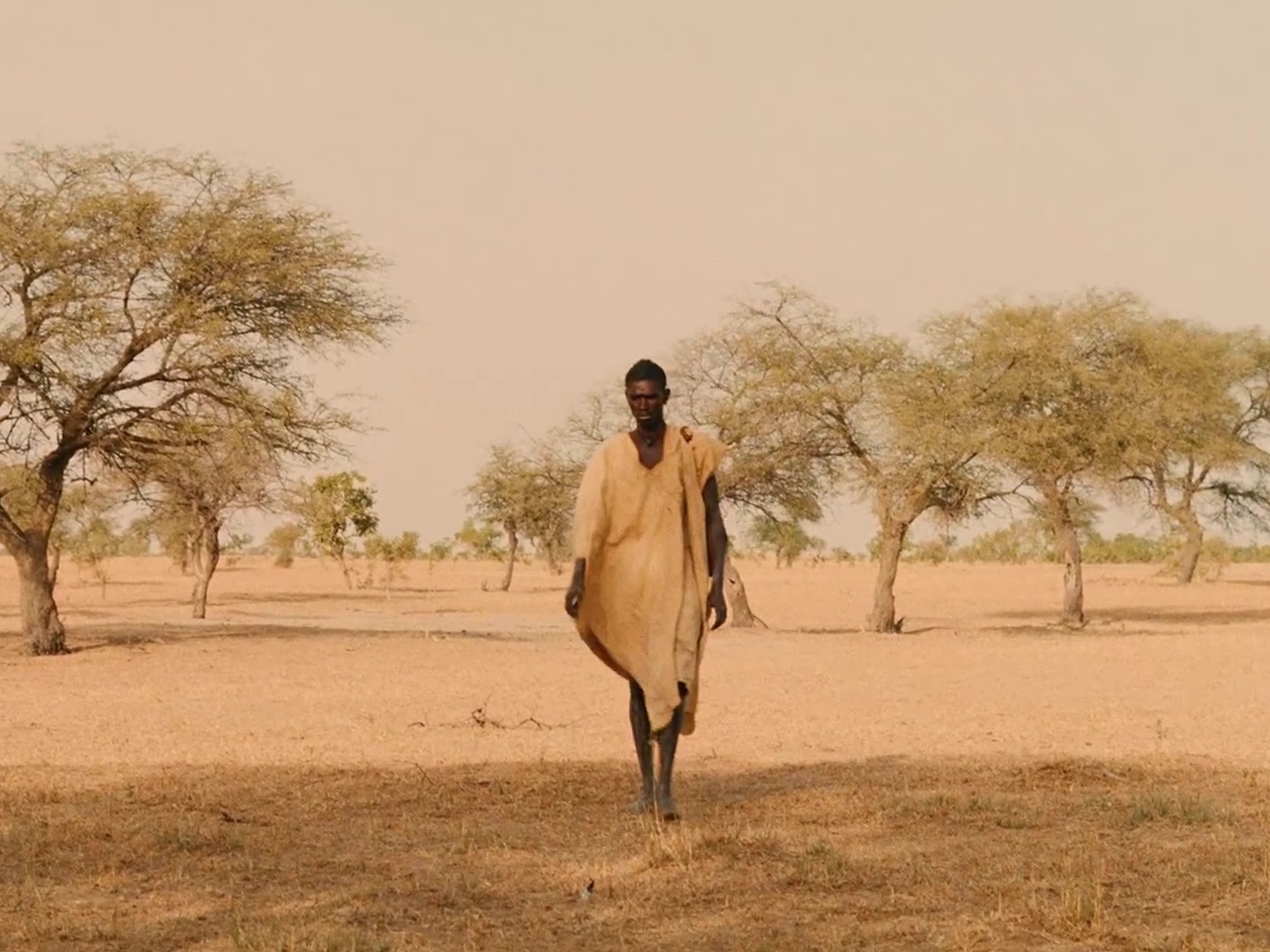
Als Laxe’s ware onderwerp onthechting en onverschilligheid is, en zijn film een vorm van bestraffing, dan resulteert dat in een eigenaardige wreedheid. In verschillende interviews zei Laxe dat Sirât voortkwam uit een “wonde”, die hij terugvoert op de Gestaltpsychologie. “Kunst is grenzen verleggen, spiritualiteit is grenzen verleggen, en dáár leer je jezelf kennen,” zegt hij. In het woord “wonde” schuilt ook de dualiteit van de film: wonden kunnen worden geheeld en toegebracht. Vreemd genoeg doet Sirât beide.

NEWS
EN

From March 13 to April 11, 2026, Metrograph and The Theater of the Matters present Boris Barnet, A Soviet Poet, a month-long retrospective dedicated to the boxer-turned-filmmaker Boris Barnet. On the occasion of the retrospective, a selection of related texts is published on The Theater of the Matters’ website.

NEWS
NL FR EN

Vorig jaar vierde Sabzian zijn 10-jarig bestaan. Sinds 2014 publiceren we essays, interviews, vertalingen, gecureerde “Collections” en “Issues”, een agenda en meer – allemaal gratis toegankelijk en met liefde voor film gemaakt. Om dit werk verder te zetten, hebben we jullie steun nodig! Word Supporter of Patreon, of doe een eenmalige donatie.

NEWS
EN

A major retrospective dedicated to Dutch filmmaker and photographer Johan van der Keuken begins at Filmoteca de Catalunya in Barcelona. Running through the end of April, the programme offers a wide survey of his work.