Frans van de Staak

People Passing Through Me in an Endless Procession
28.01.2026
A COLLECTION OF 7 texts, 4 film pages, 1 event, 1 news item,
NL FR EN

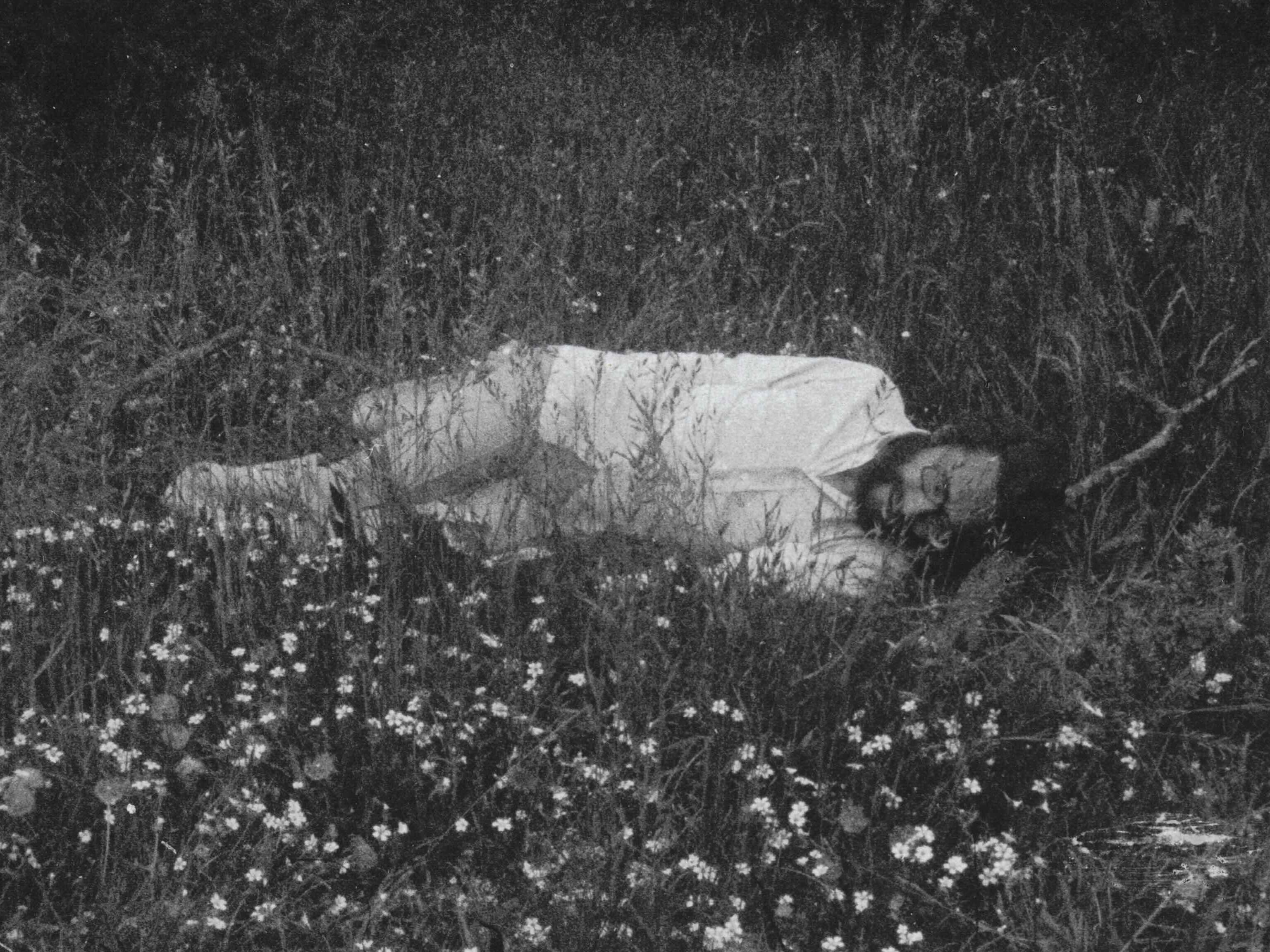
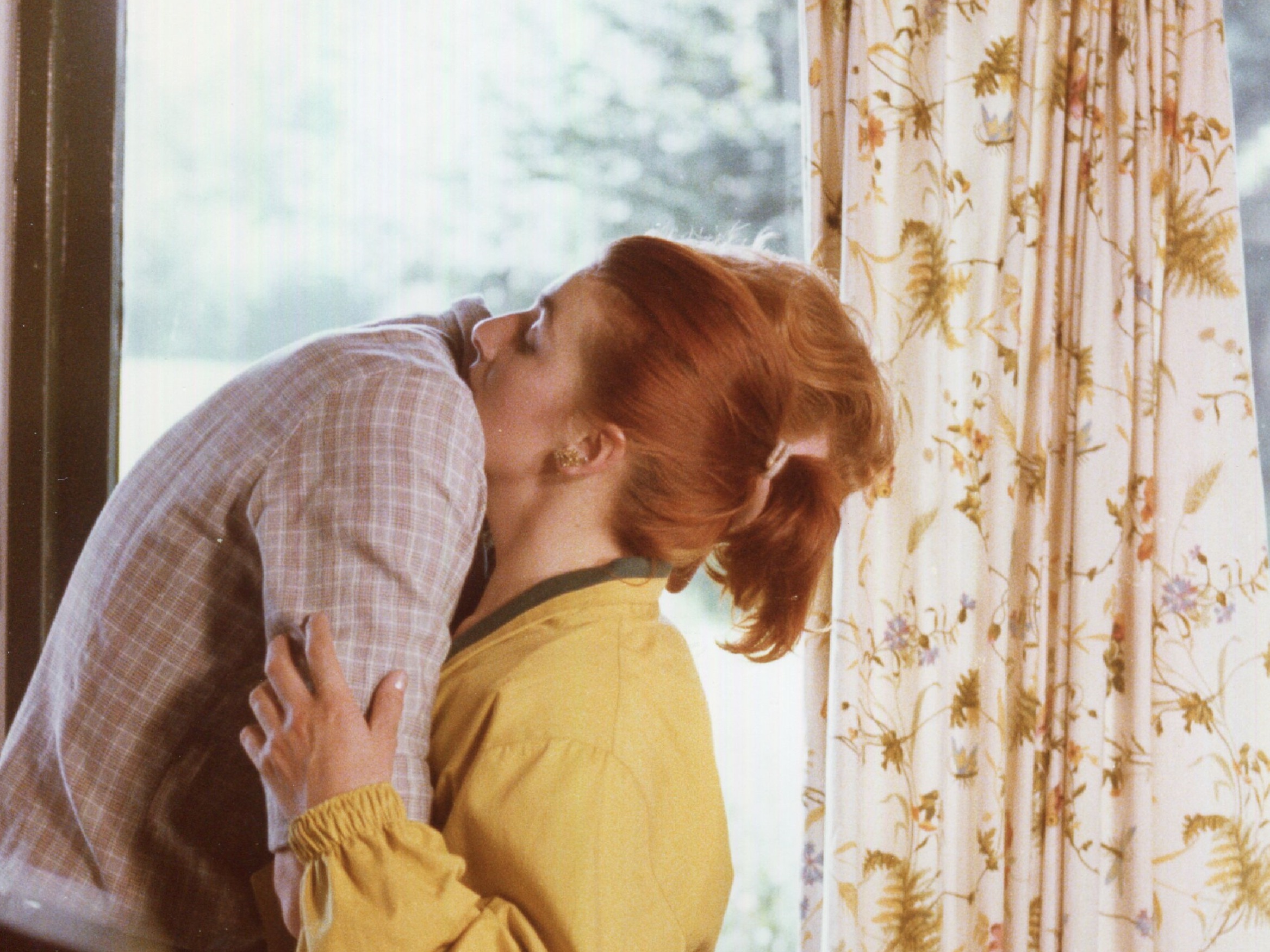
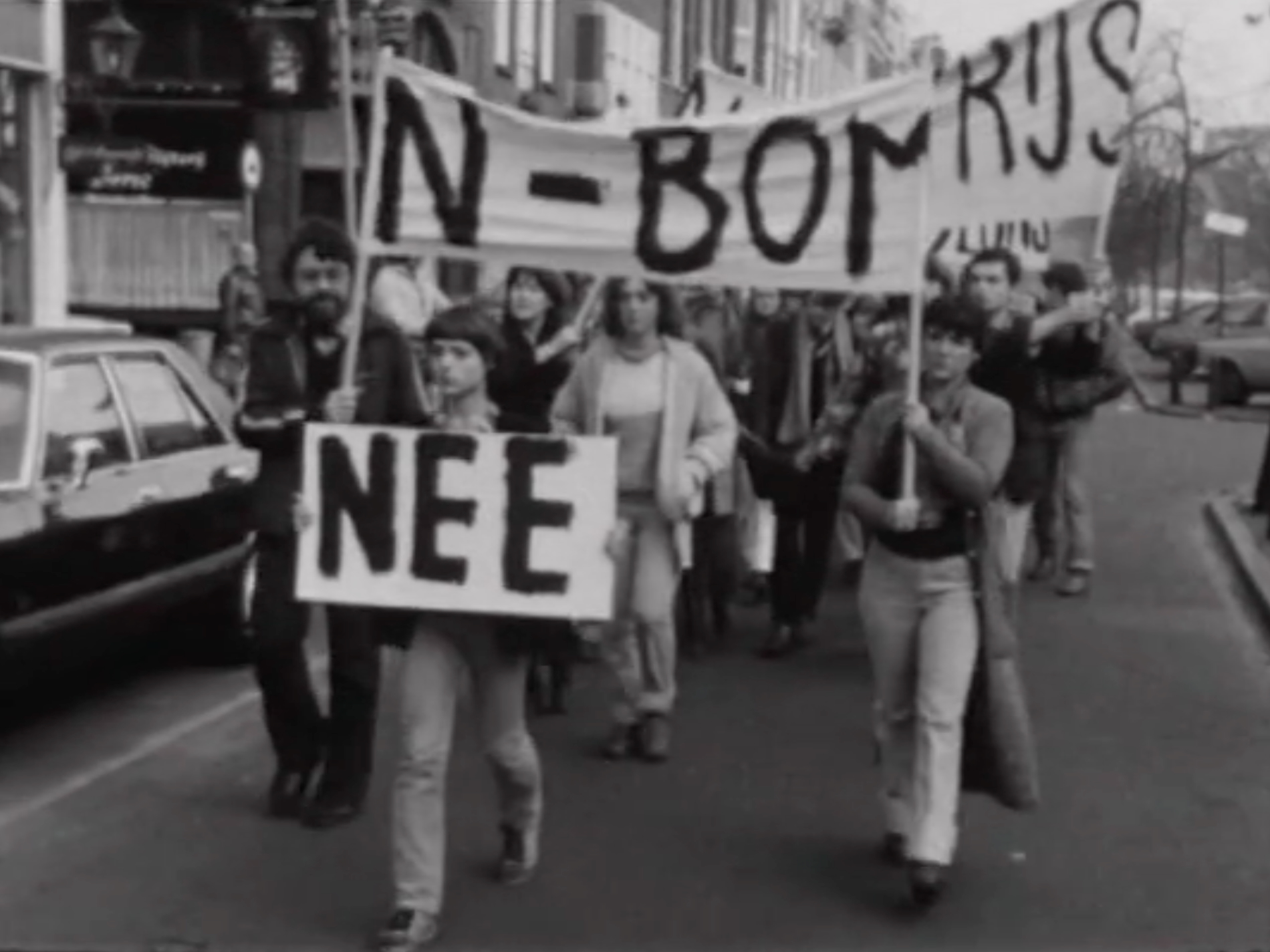
An artist and engraver, Frans van de Staak (1943–2001) first encountered the power of cinema in a sequence from Michelangelo Antonioni’s Red Desert. He went on to enrol in film school and founded CINEECRI, a journal he distributed himself. Using grant money earned through graphic design, he made a series of short films in the 1970s that laid the groundwork for his cinema: early attempts to transpose texts by writers such as Korneliszoon Poot and Spinoza to the screen. Rather than striving for faithful reproduction, he filmed amateur actors in their effort to give voice to the text, judging takes more by ear than by eye.

At the end of the decade, he began collaborating with filmmaker and partner Heddy Honigmann, who edited four of his films, including his first feature, De onvoltooide tulp (1980). Later, working later with poet Lidy van Marissing, he explored the everyday use of language, idioms, and the interplay between poetry and film editing. He played a formative role for a new generation of emerging filmmakers and forged close relationships with leading figures of Dutch experimental cinema, including Johan van der Keuken. In his self-built workshop, which ensured complete autonomy, he edited sound and image, recorded voices, and welcomed beginners, sometimes producing their films. Collaborations with poet Gerrit Kouwenaar sharpened his attention to gesture and the sensory, while music by Bernard Hunnekink and recurring shots of objects and elements of nature gave his cinema a concrete yet meditative quality. In the 1990s, having further mastered his craft, he began working with professional actors, though his films remained largely confined to the Rotterdam Film Festival, where Huub Bals was an ardent supporter. 

Returning to short forms before his final film Lastpak, van de Staak affirmed his desire to make things tangible when life’s temporality escapes us. Jean-Marie Straub called him the only worthy heir of Dziga Vertov: van de Staak sought to make the world better by inviting viewers to observe it rather than by telling stories. Asked by Van der Keuken what propelled his work, he spoke, “Desire, I’m driven by desire, not by anger, yet a very strong emotion indeed. This desire arises from the tension between being alone and being together in society.”1 2

  • 1Text via CINEMATEK. Image from Freem (Frans van de Staak, Karel Schmeink & Gerard van den Eerenbeemt, 1966)
  • 2Thanks to Stefan van de Staak, Christophe Piette (CINEMATEK), Annette Apon, Nurşen Bakır, Manuel Asín and Teresa Morales de Álava (Punto de Vista).

Texts

A Conversation with Frans van de Staak

Johan van der Keuken, 1976
CONVERSATION
17.09.2025
NL FR EN

Why did I choose Spinoza and why did I choose Poot? In fact, because they forced themselves to pay full attention to their environments, although they were lonely. And perhaps, I guess, this is my own theme. For Poot as well as for Spinoza it is desire of some kind… and the same holds for myself; although it is a little bit embarrassing for me to say this. Alright, actually, this is the proper word. Desire, I am driven by desire, not by anger, but by a very strong emotion indeed.

Nurşen Bakır, 2025
ARTICLE
19.11.2025
EN

From [Frans van de Staak], I learned not only how to make films but also how to be determined in doing so. He was open, unassuming, modest, but very strong. He was one of those rare people whose life and art matched perfectly. He spoke very little. He would laugh and say, “I started talking very late; my mother took me to the doctor for that.” Yes, his films tend to be modestly silent, but they could delve deeply into what he was telling, reaching the very essence of the subject, without any bombast.

Jacq Firmin Vogelaar and Frans van de Staak

Johanneke van Slooten, 1983
CONVERSATION
15.10.2025
NL EN

The way the actors stand there is as important as the text they utter – everything must become equally important, and therefore meaningless, because then it dissolves into itself. The texts you hear in the film are no longer the texts you read, although just as many images can be associated with them. The text has disappeared in the film, has sunk into it. In combination with these film images, you can say that this text materially no longer exists.

Johan van der Keuken, 1986
ARTICLE
08.05.2024
NL

lk zie berichten over snel stervende bossen en noteer met korte verbijstering hoe gewoon we allemaal doorleven, nauwelijks aangeraakt. lk denk aan de nieuwe film van Frans, Windschaduw.

Annette Apon, 2025
ARTICLE
05.11.2025
NL FR

Annette Apon (1949) is een Nederlandse filmmaker, scenarist en producent. In 1973 speelde en werkte zij mee aan de productie van Frans van de Staaks Uit het werk van Baruch d’Espinoza 1632–1677. Op 29 september 2025 werd deze film, samen met Terzake (1977), in CINEMATEK in Brussel vertoond in het kader van een retrospectieve van Van de Staak, voorafgegaan door deze introductie.

Frans van de Staak, 1976
ARTICLE
29.10.2025
NL EN

During editing, the filmmaker decides how each shot should be preceded and followed by other shots. Sound does not come after (or alongside) the image: sound is visible on the screen, it's part of the image, it comes out of the image, it's all around the screen, sound embraces the screen.

Frans van de Staak, 1989
ARTICLE
08.10.2025
NL EN

The only way film can represent distances is by converting them into time, into duration. That is what film tries to do: convert into duration the meters that exist in reality. Ideally, I would say musical duration. Why? Because like in music, you're dealing with elements that succeed each other. You're dealing with an arrangement. If you cut a scene from a film, it would lose that operation.

Film Pages

Event

News Item