

Adaptation as Dialectics
Radu Jude on Le journal d’une femme de chambre (2026)
For such a prolific and wildly popular auteur such as Radu Jude, it might come as a surprise that the Cannes film festival – albeit the Quinzaine – took so long to present one of his feature films. Presenting this film in particular has a certain irony and it perfectly encapsulates some of the larger questions it raises. Le journal d’une femme de chambre, loosely inspired by Octave Mirbeau’s eponymous novel (which Jude stages as a play within the film), follows a few months in the life of Gianina (Ana Dumitrașcu), a Romanian woman working as a live-in maid and nanny for the upper-middle class Donnadieu family (Vincent Macaigne and Mélanie Thierry) in Bordeaux. As the winter holidays approach, Gianina longs to return to her family back home, especially her young daughter, whom she has left behind in an impoverished village in southern Romania. Jude, working with his long-time director of photography Marius Panduru, cleverly shoots these scenes entirely on iPhone, using the “poor image” of the camera-phone as a counterpoint to the tensions and inequalities embedded in the film’s storyline.
Here, Jude is at his most political, tackling several of Romania’s largest social traumas – economic migration, poverty, parental abandonment – in one fell swoop, while also taking aim at the broader state of affairs in Europe and the world. Whether his target is the hypocrisy of well-meaning liberals such as the Donnadieus, with a clever late cameo by Rohmerian muse Marie Rivière; the gauche caviar students who employ Gianina and another migrant actor in their adaptation of Mirbeau; or the deep-seated resentments and, at times, regressive convictions that quietly torment the protagonist herself, his aim is as sharp and astute as ever.
I spoke to Jude a few weeks after the international premiere of Le journal, during a brief break that the author took between final rehearsals for his next film, tentatively titled Cum vine blînda noapte [Love Diptych]. We spoke about how his films manage to transcend cultural codes and local specificity, his views on adaptation and the usage of ultra-contemporary technologies in cinema, and his growing influence on both Romanian and international cinema.
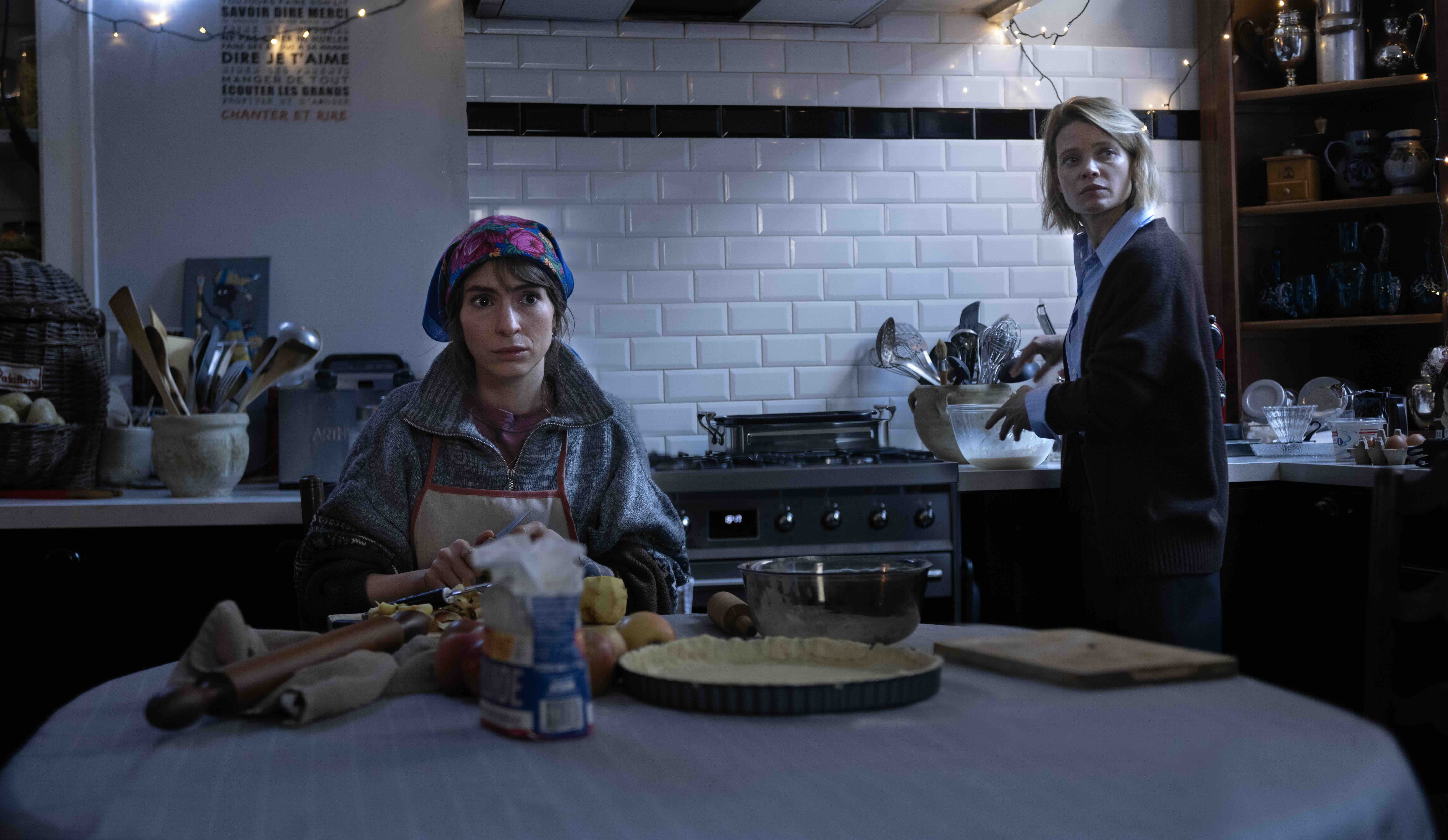
Flavia Dima: I remember that when I saw Bad Luck Banging or Loony Porn (2021), I wondered what a non-Romanian audience would make of it. The film seemed so specific, so rooted in local Romanian knowledge, that it felt difficult to translate for an international cinephile audience. And yet there are now countless people around the world who relate very strongly to your films. How do you relate to the recognition your films have received, but also to the way they seem to incorporate certain specificities and cultural sensibilities particular to a periphery, to Romania?
Radu Jude: The second part of the question seems fundamental – and genuinely unanswerable, because every work of art contains something specific: to the person who makes it, to the community and culture it emerges from, and then something that could be called – though it’s the wrong word, obviously – universal. Nothing can be universal; all works of art function through codes of reception that may seem absent simply because we are accustomed to them, from our childhood or from within the culture we live in.
I was recently recommended a book by Michel Baxandall, Painting and Experience in 15th Century Italy, about the way artists worked under contracts. They were under fairly strict contracts, as some filmmakers are today. Baxandall analyses Botticelli’s paintings and shows that gestures we think we understand as Westerners meant something entirely different at the moment of the work was created – and that these things have since been lost.
This problem has always existed: something in a work is taken for granted, part of it gets lost along the way, and other parts must be brought up by the spectators. What is the optimal balance for a contemporary work? I have no idea. I try to make things as local as possible, in a certain sense, because I believe that being local is a way of opening yourself toward a certain kind of universality – more interestingly than trying to cut away what is particular or specific.
Of course, some things can be accompanied by information within the work itself, making it easier to follow. But easier for whom? An international cinephile audience, a local audience, a general international audience? It’s very hard to decide these things, and I think I do it intuitively. There are ways of calculating this impact, but I rely on the fact that if the general lines, as I imagine them, function for an audience interested in cinema, then many purely local, contingent and personal elements can remain in the work.
And to close, I remember Jean Renoir, in Rivette’s film-interview Jean Renoir le patron, saying that it’s good to put as much as possible into a film and to try to do as many things as possible, because not will work or register. But the film will be richer, and each spectator will see something different. Otherwise, everyone sees exactly the same film, which is uninteresting, Renoir argued. Somehow, that liberated me a little from the pressure of clarifying everything in a film.
Speaking of Renoir… You’ve mentioned previously that you’re inspired by some of the canonical masters not just in terms of their films, themselves, but also by their ways of working. You named Buñuel in particular as a filmmaker who, especially in his Mexican period, worked at a very sustained, rapid pace, accepting that he was making a mix of highbrow, middlebrow, and lowbrow films. Many people had anticipated Le journal d’une femme de chambre as an adaptation that would directly engage with Buñuel’s film – but that’s not quite the case, apart from one direct reference in the script.
There are two different things here. One stems from my admiration for Buñuel and others – and not just admiration but an interest in their modes of production. Here, too, there are traditional ways of doing things and “different” ways. I believe very strongly in what Godard said: if you want different results, you have to start differently.
In European art cinema, films are, in a certain sense, all the same. They have something in common, partly because they are financed in similar ways: someone applies to their national film fund in their country, perhaps to two or three other countries, then gets Eurimages or similar funds, and finds a sales agent. Throughout this process, they need a script developed and worked over from all sides, which is then shot. This process usually takes a two to five years. This doesn’t necessarily determine what we call quality. But it increasingly affects what themes are addressed, how they are addressed, and what freedoms filmmakers can take. I want to make different kinds of films, so I’ve been forced to look for different ways of producing.
The same was true of Le journal when producer Said Ben Said proposed making a film set primarily in France. I started from some real stories of emigration that I knew. And when constructing a proposal – it wasn’t even a script at that stage – I remembered Mirbeau’s book, which exists in only one Romanian edition, from 1991. And I had also seen Buñuel’s film. It’s hard for me to define my film’s position in relation to these works. I could say it has nothing to do with them. The story is original, with some references, but the film is entirely different. At the same time, it has a great deal to do with them: it’s a dialogue, because the film wouldn’t have existed without Mirbeau’s novel and without the other adaptations: Renoir and Buñuel, above all. I found it interesting to construct what I called a variation, in the film’s credits.
But I think it’s something else: a way of constructing an adaptation of a book, or a remake of a film, as montage. This is what I also tried to do with Do Not Expect Too Much from the End of the World, where the film enters a dialectic with [Lucian Bratu’s 1982] Angela Moves On. My film is unable to exist without it, yet it is totally different. Here, the adaptation of the book is separated from the rest of the film and transformed into moments of “filmed theatre”. From one point of view, it exists independently. From another, it’s as though it were generated by contact with this springboard. Mirbeau and Buñuel, too, were springboards that allowed me to jump in a different direction, to jump the fence somewhere else.
In Le journal, there is a stark contrast between the highly polished, classically shot French scenes and scenes in Romania, which were shot on a smartphone. Beyond the diegetic motivation for this choice, was it also intended as a statement on the inequality between the two countries and, by extension, their film industries?
Yes, that’s a possible interpretation. There is also a dramaturgical reason: the mother and daughter send each other video letters. But the filming technology has an aesthetic function and, I have to say, political one, even if that may be too large a word. Technology is not innocent; using it implies a decision. When I discussed the French portion with Marius Panduru, the cinematographer, I said: “I don't have intimate knowledge of the social and human realities of a family in France, in Bordeaux. I would like the film to be almost like an advertisement, with a degree of artificiality and cleanliness.” This can be read symbolically, but at the same time, I also see a degree of artificiality: as an honesty about my position toward the place where I was filming. That’s also why the casting is composed of actors who have appeared in other films – they are taken as ready-mades, with parts of their previous characters.
Another idea – which few people noticed – was the very strange location: an apartment full of very old things, in the centre of Bordeaux, belonging to a family of ophthalmologists who had lived there from the nineteenth century. The family lived on the top floor, while the rest of the apartment had been left almost as it was in the nineteenth century, apart from two or three newer elements. There is also a reason I chose Bordeaux: it was one of the cities massively developed through the slave trade. It was a small irony to set this story against that historical backdrop.
Regarding my critique of the film industry, I would nuance that slightly. I’m not bothered by films being made with a lot of money, or by those films making a lot of money. What strikes me, as technologies for creating and editing images become cheaper – potentially democratizing cinematic creation – is how closed certain structures remain. It’s still difficult for an amateur to make cinema, though there is a greater possibility than thirty, forty or fifty years ago. At the same time, budgets grow and the industry holds itself together like a kind of citadel, keeping these forms at a distance.
You have also started incorporating some of these “amateur”, often frowned-upon technologies into your work: starting with Do Not Expect, you’ve used iPhone cameras in your films; and, speaking of technologies that are not innocent, you used generative AI and LLMs in Dracula. Would you say that this also ties into your critical perspective?
I was amused that Kontinental 25 and Dracula, both shot by Marius Panduru – who is an exceptional cinematographer – on iPhone, received not even a nomination at the Gopo Awards [the Romanian film awards, ed.]. Not that the awards matter, but as a point of principle: at the same ceremony they gave Marius a special award for his work for The Return, a big-budget film he shot with Juliette Binoche and Ralph Fiennes. If we take the Gopo Awards as representative of our industry, the message is clear: “Technologically speaking, this isn’t right – you should make films with big budgets, with serious cameras.”
It’s like with music. You can have opera or symphonic music performed in a concert hall where tickets cost hundreds of euros, but there’s also jazz, rock, manele or someone playing on a street corner. Nobody feels under attack because someone takes their violin into the street and is playing, or records themselves singing in the shower and puts it on YouTube. In cinema, by contrast, there is a constant anxiety – perhaps also a fear that cinema is dying. And so any new technology provokes fears, as AI does.
I’m not referring to everything AI represents ecologically or in terms of control and all that, but simply to it as a possible technology and – especially for a poor country – a possible way of making things. Like any new technology, it can be used intelligently or badly. The reception of Dracula in America surprised me because I wasn't aware that almost 90 percent of the discussion would concern the use of AI-generated images. The American industry is trying to barricade itself against them, because of, among other things, their water consumption – but all technologies consume water. If you weigh things up, I’m convinced that, given how much I “saved” on Dracula by using inexpensive AI software, I polluted less than if I had made the film “the proper way”.
The fear is great, and I understand why. It’s an industry where a great deal of money is made and consumed, and suddenly someone comes along with something like this and the response is: no, it must be kept at a distance. But I don’t see how it can be kept at a distance, given that it exists and is getting better and better – dangerously good, in fact.
I’m not an apostle of AI, but if something exists on the market, like a phone, I’ll film with it. If I can create images or sounds with a piece of software, whatever it is, I’ll use it. Rather than fighting windmills, it would be better to push for a sociopolitical regulation of AI and accept it as a possible element in the production of anything – because in any case, it is already being used. Who doesn’t use it?
I fed the last script I’m working on into Claude – the free version, since I don’t pay – and asked it to tell me what faults it found in it. It came back with some observations, then I told it who I was and asked it to compare the script with my filmography. Then it told me that one scene wasn’t very good, so I told Claude to rewrite it. It was a fairly corrosive and brutal scene in which an Orthodox priest insults a Jehovah’s Witness somewhere in the countryside. Claude transformed this scene of insults and violence into an extremely gentle one, in which the characters merely discuss things with some minor arguments. I didn’t keep the scene, but I did rewrite a page of my script based on this back-and-forth with the AI.
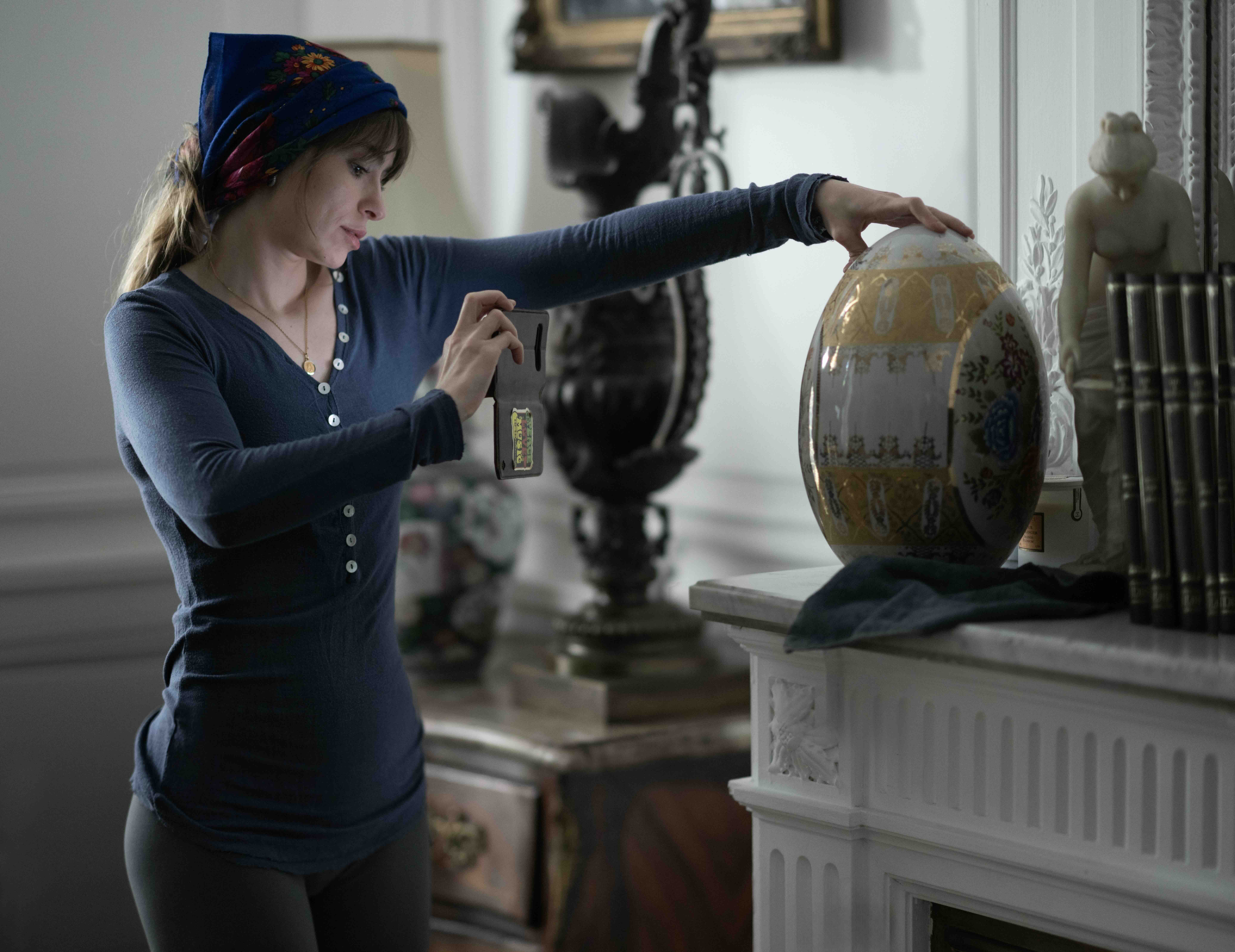
It’s interesting that the student theatre adaptation of Mirbeau’s original text, within the film, ends up reproducing the very stereotypes it tries to combat – not unlike what happens in another of your films I Do Not Care If We Go Down in History as Barbarians. You also had a brief stint as a theatre director in the 2010s, adapting films for the stage. How did you construct this part of the film and, in particular, how did you collaborate with Ilinca Manolache, who is known in Romania for her roles in independent theatre with a political “dispositif”, and whom you cast as the director of this production?
I’m glad you asked, because there are many things to say here. Re-reading the book, I realized that what tempted me wouldn’t be to construct a new story of perverse, caricaturized and extreme abuse, as in Mirbeau’s book. The novel was extremely provocative at the time of its publication and was beloved by the Surrealists, which is how Buñuel came to it, long before he adapted it.
What seemed interesting to me was the relationship between East and West – and something of this is contained in the very production of the film. Owing to the way things are set up nowadays, people no longer need to be perverse, violent or callous for a system of exploitation to exist. A system of exploitation can exist – and this a question the film poses – in which people are extremely nice, benevolent, open, polite, civilized et cetera. And yet, beneath all this, a certain kind of exploitation continues to exist. That is what I wanted to set in opposition to the book: to show a system of exploitation in which the drama is not what happens in front of the camera, but what happens off-screen, somewhere far away. Suffering is somehow excised, removed from the space where these people live in comfort, and left to fester somewhere in a Romanian village. That is why I consider the film to be Eisensteinian, a montage film – because the scenes set in Romania enter into a relationship with the scenes in France, which in turn have a relationship with the scenes in the theatre.
Rivette, who was obsessed with theatre, has a short text where he says something along the lines of: “Theatre is the true art of truth and of lying.” So theatre can truly be a subject for cinema. I think there is something about filming theatre, or constructing a film around a theatrical production, that makes it very cinematic. It may also be a small act of revenge on my part: when I failed the entrance exam at UNATC [film school in Bucharest] – at the first, eliminatory round, where you had to write a short script – the head of the committee told me: “What are you doing here, young man? This is filmed theatre, not cinema.” And that stayed with me.
At a certain point, I thought the story of the theatrical production might go off the rails, through the way it is produced and constructed, into something opposite. I had indeed used something similar in Barbarians, and I was oscillating between the two stories. In the end, I decided to combine them, rather than repeat either of them, and create a third strand. The film has three interwoven strands: Gianina in France and her relationship with the French family, her relationship with the daughter she essentially abandoned in a Romanian village, and the theatre production.
Your cinema is always deeply political. For me, one of the most powerful moments in the film comes when Gianina recites the classical Romanian folktale, Youth Without Age and Life Without Death – which you transform into a parable about migration by editing it together with images of a deserted Romanian village. It was particularly moving to watch this scene when I saw the film abroad.
Something else that preoccupies me – I don’t know how to define it – is that I want my films to be sketches, in a sense: not all the lines they open should be closed. In a sketch, you can draw the main elements and add things alongside them that may disappear in the final painting. I’m interested in the potentialities within a film more than in what a film resolves. It’s also a way of being honest with one’s own material. Some elements are just hints toward other possible directions or stories. Some might become subjects for other films, some for works by other filmmakers, or simply material for reflection. For example, the story of the character deported because of that theatrical production – made with good intentions – is not developed. But it is, indeed, a fundamental direction, showing that beneath the appearance of Western society and its culture, there are some dangers that exist for everyone, regardless of where you come from.
As for the fairy tale, Youth Without Age and Life Without Death, it imposed itself gradually. It was the most discussed element during the film’s financing phase, including at a pitch for regional funds in Bordeaux. I wanted it in the film from the beginning, but an initial edit included another story Gianina told near the beginning of the film – Ion Creangă’s The Stupidity of Man. I removed it because I wanted the moment with Youth Without Age to be unique, at the centre of the film as a kind of digression into Romanian folklore, transposed into French. I wanted it to be where the metaphysical and emotional dimension of the story emerges most powerfully – time passing, things disappearing, people disappearing, death closing everything. Because of the context, the fairy tale also takes on a political dimension that isn’t necessarily present in the story, itself. You wouldn’t think of it at all as a political-social fable.
After most of the shooting, I still had two or three small things to film in this village [where the Romanian part of the story is set]. Then there were some days when the rain just wouldn’t stop. Walking through the village, I realized that half of it consisted of holiday homes belonging to people from Bucharest, with only a few local inhabitants remaining. Many houses were abandoned and in ruins. I started filming in them, and at one point the man in whose house we were using for scenes with Gianina’s daughter – a local – said: “You know, my mother-in-law’s house is somewhere outside the village, and it’s interesting.” We went to have a look. We walked across the fields together and arrived at a house that suddenly struck me. You could feel that there had once been life inside of it, but it was now almost impossible to enter because a lot of weeds and thorny shrubs had grown up around it, hiding the house. We pushed through them, and suddenly the house opened up before us – overrun with moss, lichen and spiders. It seemed very powerful to me.
This encounter made me suggest to Marius that we should film these houses and perhaps use them to accompany the story. I had strong reservations, because I don’t like images simply illustrating a text. But when I put them together with Cătălin Cristuțiu [Jude’s long-term editor], it suddenly seemed they did something else: they opened the story onto another dimension. A deserted house inevitably evokes thoughts of disappearance, death and loss. For me, it’s more powerful than the image of the ruins at Pompeii. All those elements – an icon left on the walls covered in cobwebs, a bicycle abandoned in the yard for years… At the same time, the images carry a very concrete reality: these villages are being depopulated as people leave for Romanian cities and for the West as well. So, in a sense, those images also contain this drama of emigration as a kind of backdrop.
Because I was unsure whether the images would work, the production team later asked whether I wanted to look for other shots. I didn’t want to. I wanted the film to retain the imperfection of a decision made in uncertainly.
What was it like working with Ana Dumitrașcu? She has a very demanding role here, having to perform most of the film in a language that is foreign to her, yet seems to have contributed to the character in many ways to it. I find it particularly interesting how she understood Gianina and the kind of sacrifices she makes.
After making Dracula, I was already thinking of her as a possible actress for the film, but I was determined to do a broader casting process. I don’t particularly like doing that – I’m very divided about the whole idea of casting. Said Ben Said told me I needed to do a quick casting call for an application, so only two or three people came in for screen tests, and Ana seemed the most suitable to me. She took the role very seriously, as she does with everything. She is an extremely serious, hardworking actress. The only issue was the language, and for that I had the help of my assistant director, Jeanne Dassy, and the sound engineer. From time to time, they would tell me: “Careful, that word means something else here,” or point out that she had skipped a word in a sentence or that her pronunciation was unclear.
Recently, your work has begun to influence a younger generation of Romanian filmmakers, such as Vlad Popa or Vasile Todincă. How do feel about filmmakers drawing inspiration not only from your praxis, but also from the ways you use polemic in relation to image, text and form – a curiosity about these open forms and “sketches” you work with?
I make things that are fairly different from one another to the point that I don’t even know how to define myself, nor do I think I can. I believe very strongly in what Godard said: it doesn’t matter where you take things from, what matters is where you take them. If someone is influenced by my work, what matters is what they do with those things going forward. There are still so many things to do in cinema, so many directions to explore, and our relationship with technology has become more complex in recent years than ever before. It’s exciting to think about how many possibilities lie ahead. I think what was missing from Romanian cinema – and perhaps still is – is a certain diversification in terms of style, subject matter and production. There are more directions now. We have a genuine commercial cinema, a “conventional”, traditional European arthouse cinema, and forms in which people try, better or worse, to do something different.
Godard also said that Fassbinder had “creative obligations” toward Germany. In a way, I feel a similar obligation as a filmmaker: for my cinema to bear witness to the very powerful and dramatic changes in our society in general, and in Romanian society and culture in particular. That’s the only thing that drives me forward. I want my films to be a form of research, so to speak, into the world, into life, and into the realities around us. I’ve said it before, and unfortunately it remains true: life is hard in Romania, but this Romanian soil, everything that happens here, offers so much. It is fertile ground for all kinds of narratives. I'd like to make ten films a day, if that were possible.
What can you tell us about the new film that you are working on?
In a sense, it’s a film in which I try to describe a form of modern rurality, and once again there is a dialogue with other works. For some time now, I haven’t been working from a blank page, as the saying goes, but rather trying to enter into dialogue – even if only through small footnotes – with other works. And the touchstone here is Roberto Rossellini’s L’amore.
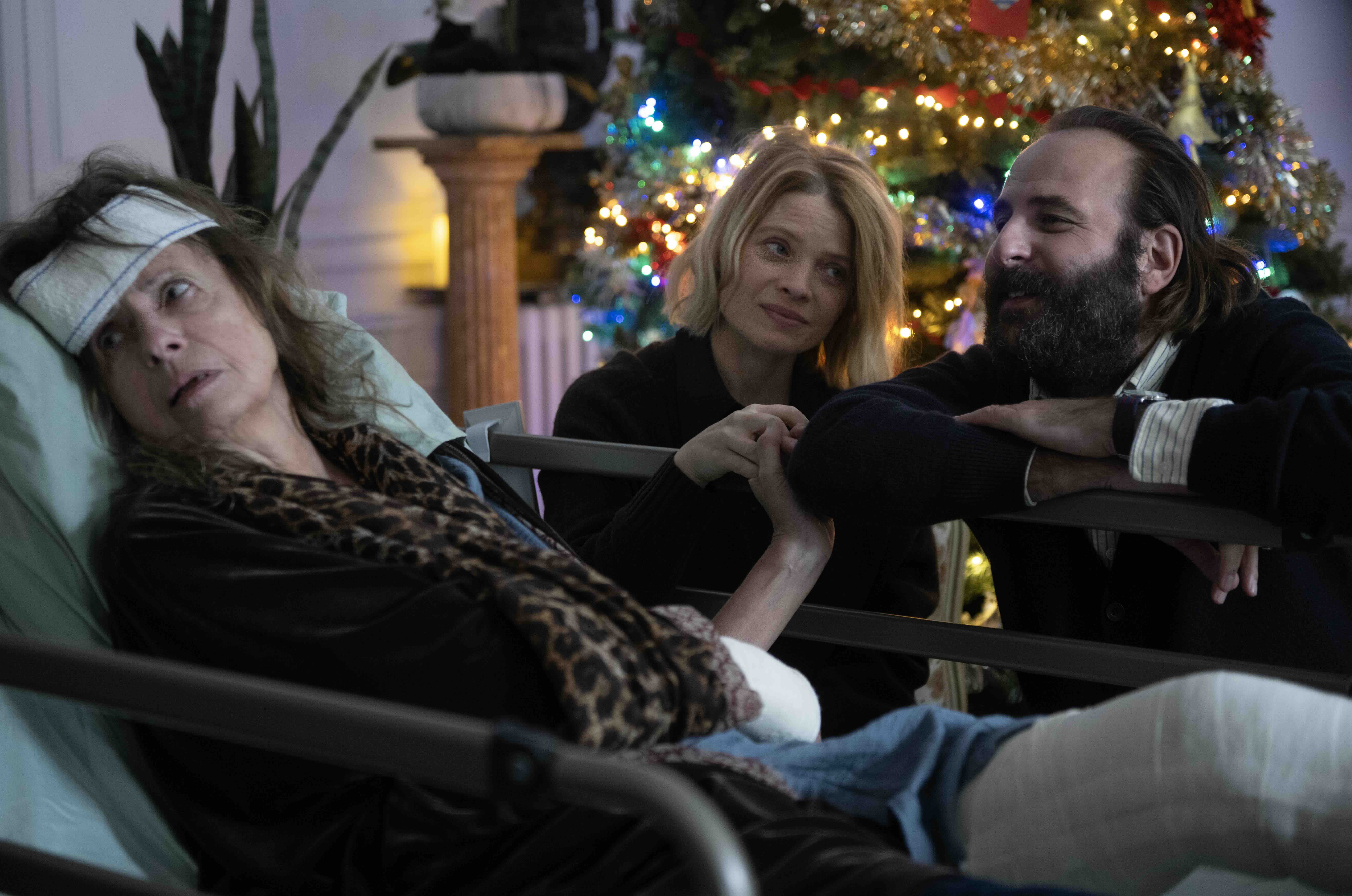
Images from Le journal d’une femme de chambre (Radu Jude, 2026)

