

A Love-affair with Truth
As to your question about my basic principles of filmmaking: I am against principles. Art is not a thing, it is a process. Process in which there is a sensitive balance between intellect and emotion and conflict between the original conception of the artist and his discovery of truth. Fixed principles inhibit this discovery. Art is neither a purely intuitive process nor purely logical, it is a fusion or, better, a synthesis of both with additional elements which defies absolute analysis. Can there be such a thing as an artist who operates purely on intellect?
I think of this process as a battle between intellect and emotion, which is the reason why art is very often tiring.
An artist develops technique, style and working principles, but they are not the controlling force in an artist's work. The paradox is that, although an artist should develop a style, this eventually becomes a limiting factor to his creative growth.
It is important for the filmmaker to have a viewpoint, a background of knowledge, new conceptions, as a guide to his work. The artist is inspired by his predecessors – he grows out of the past, works in the present in order to influence the future. He describes the present in ways that will be grasped in future.
The artist is driven by his material, his subject matter is what gives him the form. “It is a love-affair with truth,” in which the subject eventually becomes master. If the film-maker has a preconceived form, he will treat all subjects with the same form, he will be inflexible and over-stylised, without versatility. The form must grow like a living thing out of the material. If this is itself a principle, it is an infinitely variable one – a mystery. Art is indefinable: one can discuss it, analyse it, but not define it. You cannot define emotion, you cannot define art. Artists who lay down fixed principles for other artists are only defining their own art.
I hope I am never blackmailed into teaching filmmaking, but my first statement to the apprentice filmmaker would be “Disregard my principles because all I can give you are my ideas about filmmaking, my own methods, which only suit my personality and no other temperament – and after all it is the total character, you could say the personal culture, of the artist which is the most important thing about his work.”
Art and life are closely paralleled. As a human being is body and mind, art must be a synthesis of form and content, and it is impossible to separate these things or to sacrifice form to content, any more than one can separate the mind from the body. It is the fusion of these two elements that creates a work of art and one element alone is not a work of art. This is why many films of good intentions – positive films for peace, against racism – are often failures. It does not matter how good the intentions: if the film ignores form completely, it fails to communicate.
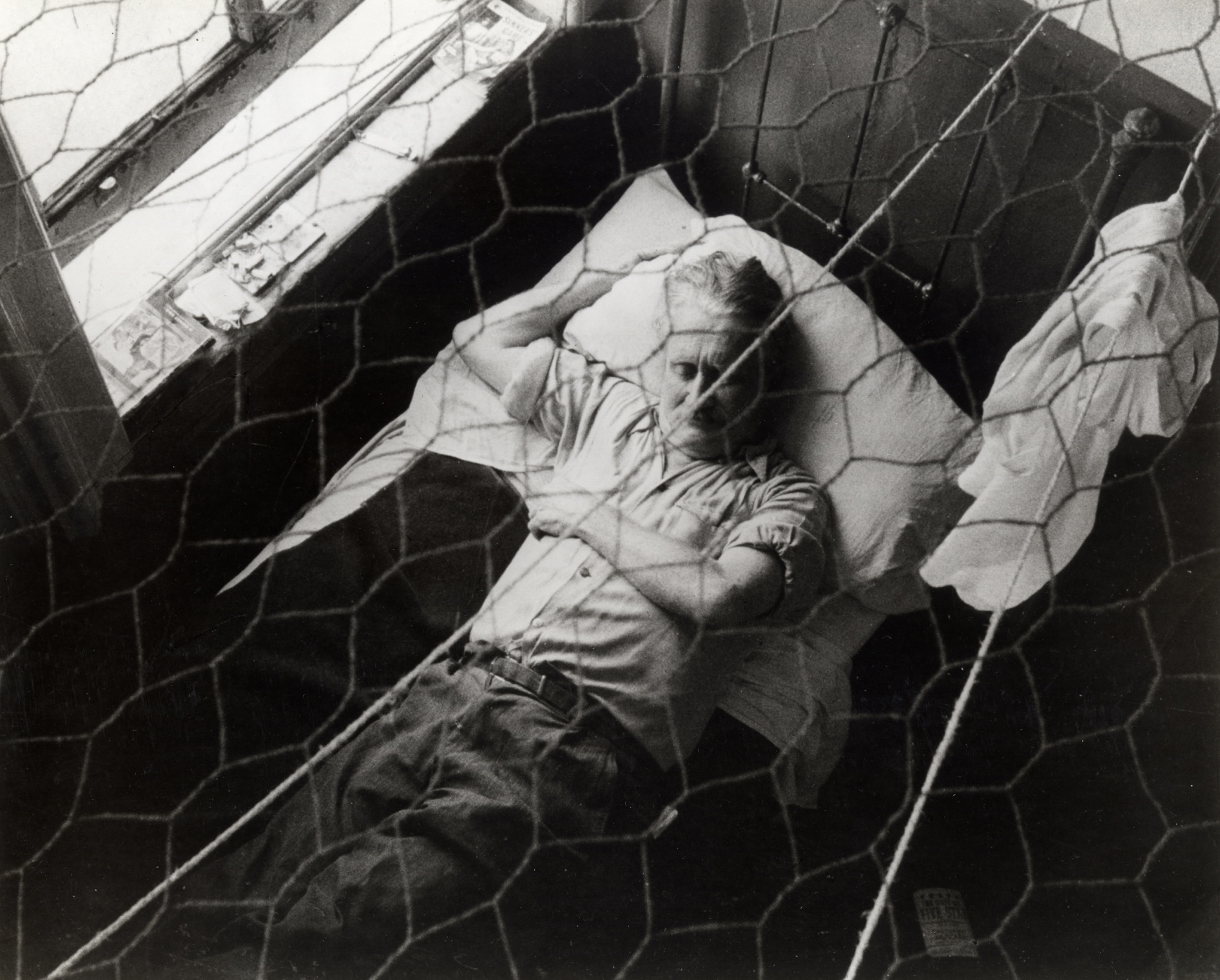
Image from On the Bowery (Lionel Rogosin, 1956), courtesy of Michael Ariel Rogosin.

