EN
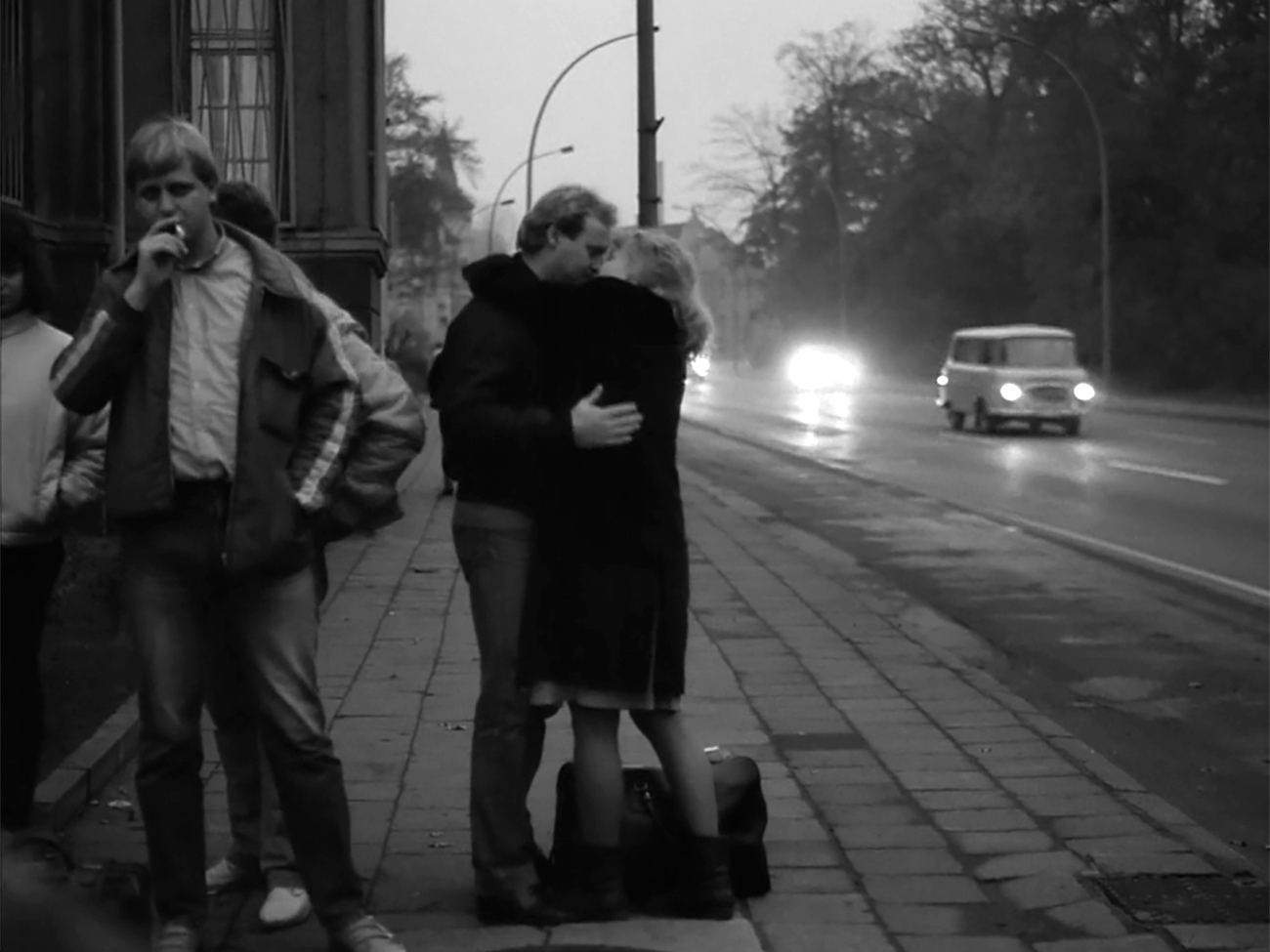
“The three structural elements in Winter Adé are the railroad journey, the intensive meetings with women, and the observation of daily life. The only fixed aspects of the film was that it begins with my birthplace in Zwickau and ends on a ferry on the sea. I definitely wanted to tell about myself in the beginning: by accident, I was born on the road, in an ambulance, right in front of a closed railway gate. And this fact leads into the concept of a railway journey. Of course, the railroad is a very important means of transportation in the GDR, but its meaning as a poetic symbol is also clear. It points to the existence of closed borders and also to the internal structure [of the country]: there are many tracks in life, but generally you can’t depart from the one you’re on because the switches are operated by someone else.”
Karen Rosenberg in conversation with Helke Misselwitz
“Of course, you can say you can make a film with your mobile phone, without money. But the way I learned and experienced it – it’s important for me to make a film with others, with others who are all professional, professionals for camera and sound. I don’t want to take away their work. Of course, I could somehow do it all alone, but it’s a different concentration. When you do something together with others, there are other ideas and inspirations that come from working with others. It’s more communicative, and it just gets better when you make a film together with others.”
Elizabeth Dexter in conversation with Helke Misselwitz
“Documenting the final days of a dying country, films like Bulky Trash, After Winter Comes Spring or Who's Afraid of the Boogeyman tell me more about life in East Germany than my West German education had ever told me. Those films document a changing world. They can be described as journeys through a country which doesn’t exist anymore.
However, it’s better to remain careful because, although Misselwitz is a filmmaker easily associated with DEFA and a strong double emancipation, relating to a people and to women in particular, her films are much more complex than the political slogans under whose banner they were made. Time and time again, I’ve encountered them in a more or less political or historical context, and I always ended up feeling blown away by their sheer openness, curiosity and formal brilliance. I came for History and I left with a heart full of people."
Patrick Holzapfel