

Filming a Skid Row
The Bowery, the infamous street of derelicts in New York, is a syndrome of human blight, waste and decay; misused and shabby men living in a stale tenement city-confusion. At the turn of the century, the Bowery was a high-life district; it has long outlived its reputation, with only faded memories of that kind of vitality remaining. For years the street has been a refuge for the marginal people – the homeless and friendless, the alcoholic, the dope addict, the mentally ill, the prostitute, the aged, the petty thief, the uneducable and unemployable, the occasional railroad worker and seaman – a sociological underground that moves in and out of city hospitals and prisons, welfare offices, grinding jobs, domestic courts, seedy employment agencies, and all the grey, antiseptic smelling unprivate places. It is a sifting down to the bottom level – the sediment of a society that is inexorably carried down to this last place to exist. And beyond all the other poignancies and rationalisations is the salient impulse of drink and the fact of drunkenness – stale beer, cheap wine and whisky, the harsh, blinding liquid squeezed from canned-heat, and the ingenious extraction of alcohol from any source.
I
In our experience and knowledge, this would be the first attempt to make a feature-length film about a skid row. How to make such a film? To deal with it as a few city blocks of physical and social decay, spanned by a dark and dirty elevated train, with stratifications of alienation, would be merely an experiment in urban sociology. It had to be individualised, and this was difficult not only in terms of dramatic action but of the kind of people to use. Looking at the men on the street, their grubby sameness, it seemed as though there were some correlation between body structure and misfortune. However, this snobbery was the beginning of our education. It was decided to make a film about a few men – alcoholics (a sociological and psychological abstraction, but in human terms a suffering personality) on the very level and the place in which they lived.
What we wanted to avoid was cheap melodrama set against “real” or “documentary” settings. What we intended was to extract a simple story from the Bowery itself. Not a “typical” or “symbolic” story, but an essence of truth of the place to expose (not dramatise) the hopelessness, the aimless dread and fear of such lives – without an arrogant sentimentality or too-generous morbidity on our part. For the other side of the Bowery is what men live in all places of the world; they fraternise, banter, work a little, and feel not too sorry for themselves.
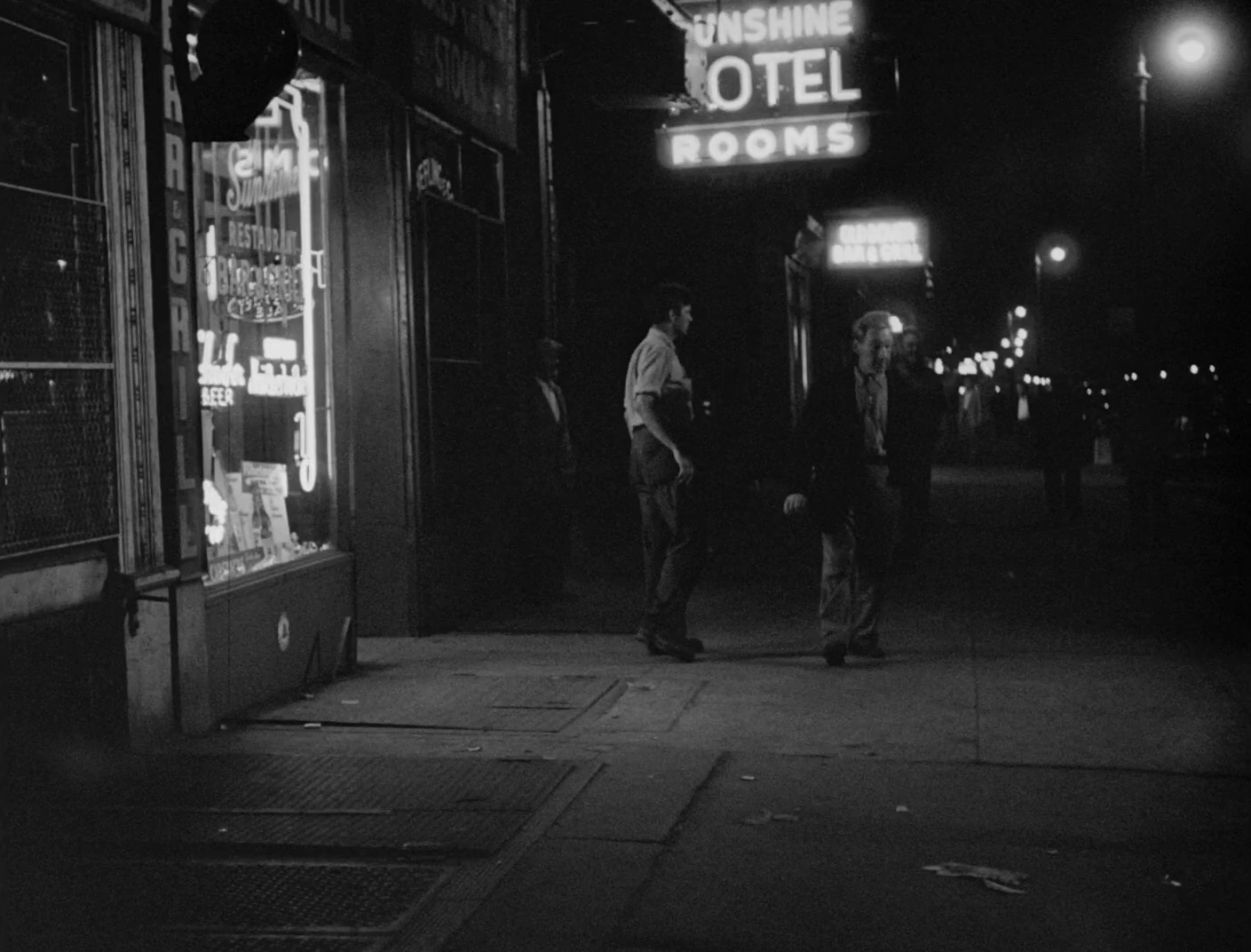
For months we observed and talked with the men, drank in the bars, walked the streets, visited the missions and flophouses, before deciding what shape the film would take. The Bowery is not a bizarre sin-street of women, lewd gratification or illegal dissipations; but a furtive night-street of men and sleazy bars, huddled and broken figures in doorways, shattered men who wish to paralyse in themselves with drink and senseless violence what human beings desire most to keep alive. We decided to make the film as we saw the street. It would be photographed as exactly as we could while the cycle of each numbing day followed another; action would be recreated only within the frame of the script and precisely as we knew it transpired. Our actors were taken from the street and would speak in their own argot, with guides of what to say only for story purposes. Direction on our part would try to define the action, but not gesture or inflection to fit a man to a specific role. But more than selecting “real” people to play “real” people, we evolved the roles as a synthesis of the Bowery. Then we proceeded to look for men who would not only be what they were supposed to be acting, but men capable enough to perform before a camera. In any other milieu this would not be too difficult a task; but here was the added problem of the psychologically unstable character of the population.
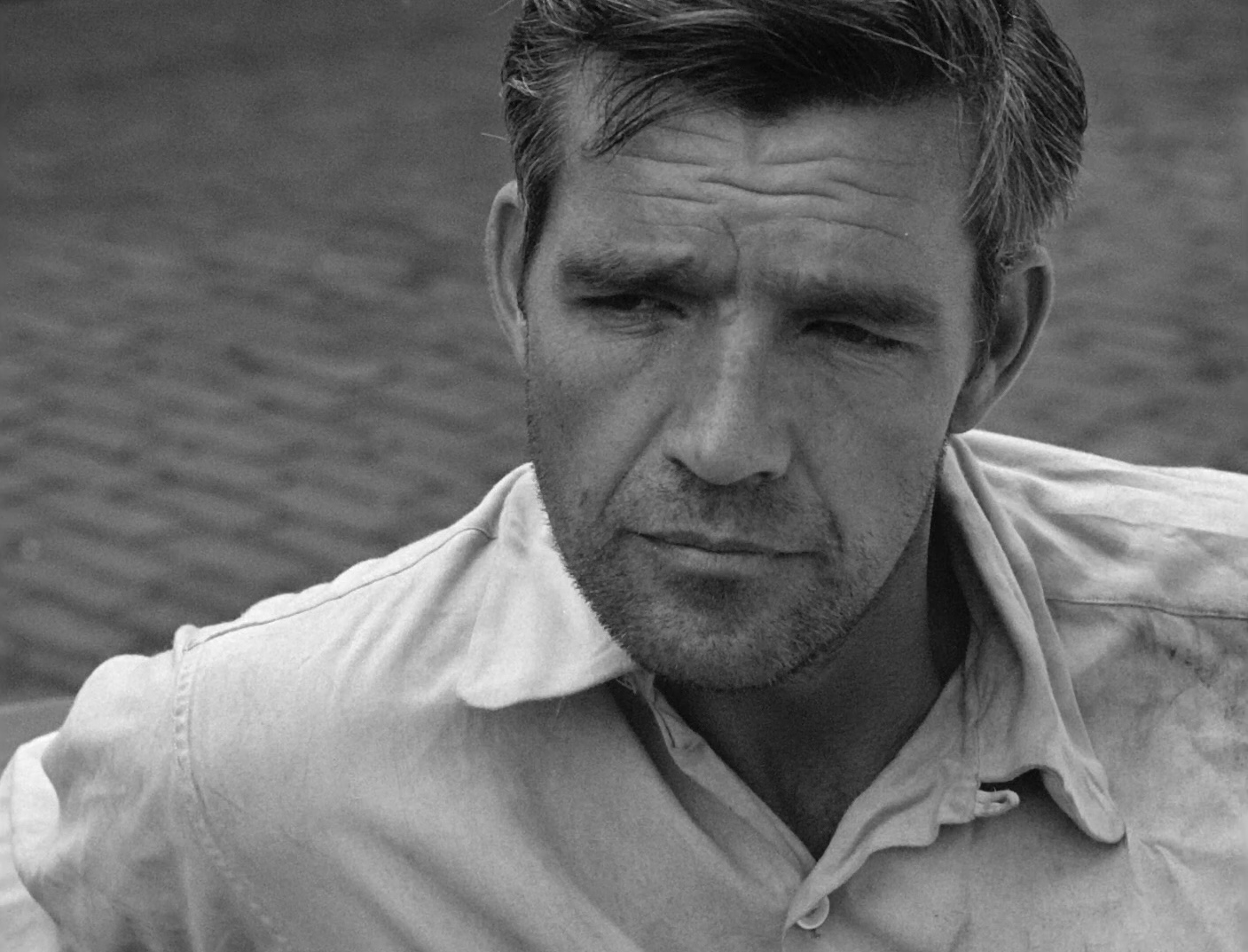
The actual mise-en-scène of the Bowery was perfect; but there was some hesitancy on our part. As we conceived the film, we were uncertain whether we were telling the truth about a place or merely presenting an outsider’s version of what the Bowery is. As we selected the players we became certain of the approach and the insight gained. Standing on a corner where the younger men looked for a day’s work on passing trucks, we spotted what looked like a perfect choice for one of the main characters – physically he was all that could be asked. When we approached and talked to him, we were amazed and delighted with the almost exact duplication of his own story to ours. If this seems a little juvenile or naive, permit me to explain. It is one thing to “write” a role and then cast it – even with a non-professional. It is quite another to give a man a specific age, appearance, occupation, sectional origin, a set of circumstances, then to walk to a street corner and say “that looks like him” and then discover that he is precisely what you said, right down to the sum of money (almost to the dollar) he earned and threw away drinking. With the other leading character it was the same story, although some of the features of his shrewd and alcoholic fantasist’s personality were pieced out scene by scene so that he was never quite aware, until the end, that it was himself on film and not someone else he was purporting to play.
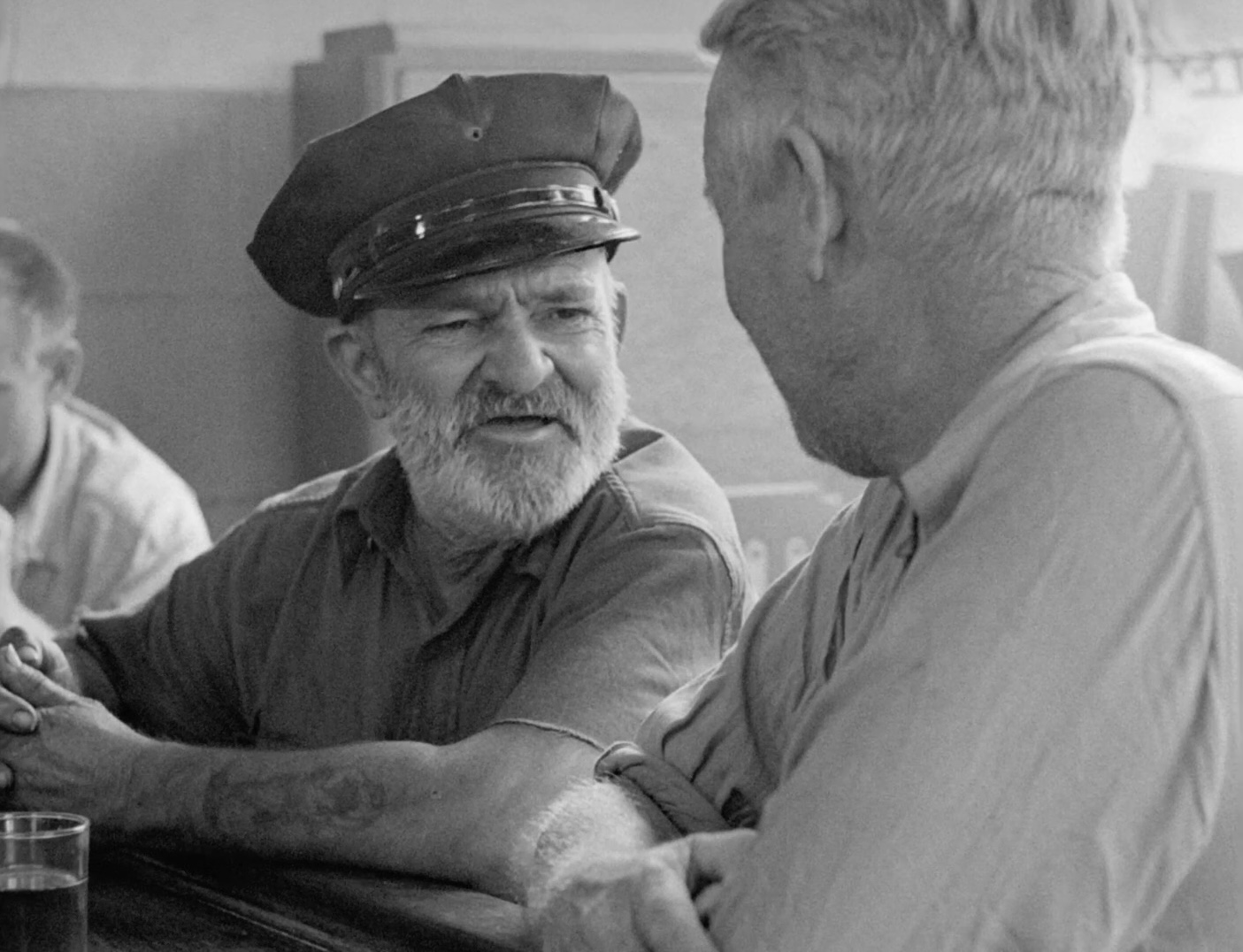
The “supporting” cast was a gift of the street itself. The Bowery is a spectrum of a thousand personalities, stories and lives. There are gnarled, lumpy workers’ faces; wilted, aged, seamy faces; haggard, pouchy, teary alcoholic’s faces; and there are bright-eyed old seamen, hard ferret-faced grifters, and pimply young luftmensch. And there is also a comic tatter about the place. It is a babel of accents, dialects and twangs; men from all over the world with stories and personal misfortune of every kind and experiences beyond the knowledge or desire of most people. They walk the street – men with ego-supporting fantasies and childlike temperaments; violent bruisers, and poor muttering dolts and psychotics – with the licence of a culture unwilling or unable to care. Most of the population of thousands are harmless but themselves are harmed, holding on to an existence that means loneliness, terror, and death in some alley or flophouse at the end.
Very few, once they hit the Bowery, ever leave, are reclaimed or rehabilitated. These are the people who “just don’t give a goddam” any longer. Free of the whip of normal ambition, responsibility or demands (though they live lives of ritualised retreat), their only imperative is the need for alcohol. The need to buy it and to sleep it off. Outside of the relatively small percentage of occasional or non-drinkers, it is all the same to the Bowery “Wino” – night, early morning, rain, winter and summer, listening to the agonised jump of the jukebox or walking through the street which contains all the elements of normal city life – they respond to an intense inner-compulsion. They are men too concerned with the fracture of their own personality (though they are only conscious of its demands).
II
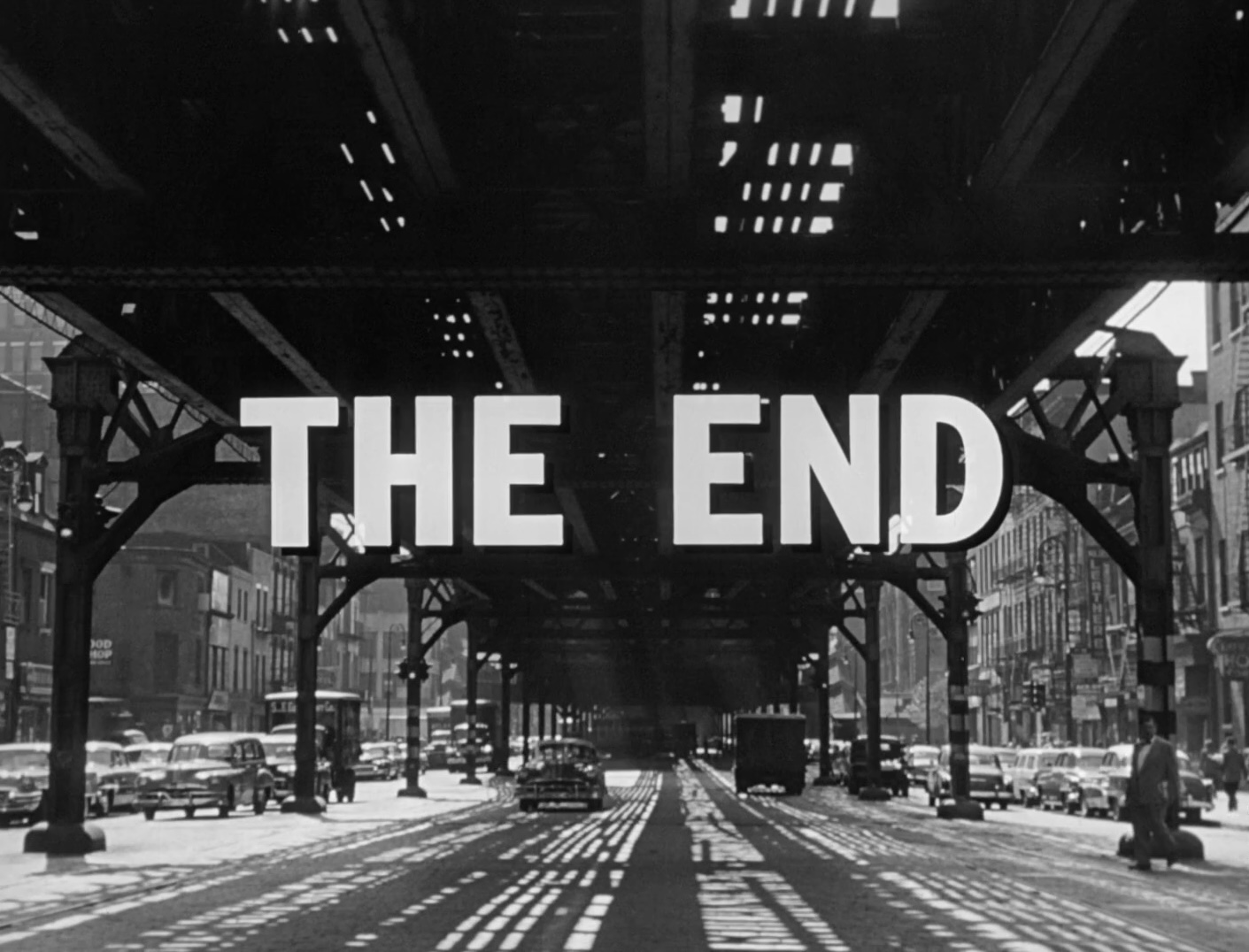
Outside of the mechanical details, not too much pre-production planning could be done. Since we did not wish to commit ourselves beforehand, no bar or flophouse owner, none of the furtive side of the Bowery, was contacted. We did a certain amount of research at Yale University and with physicians connected with Bellevue Hospital, where clinics have been established for the study of alcoholism. The officials of the Bowery Mission promised their co-operation, and with this we were ready to start. The script was written, locations chosen, and arrangements for a crew made. For the bulk of the film, it would consist only of Lionel Rogosin, who produced and conceived the idea of a film on the Bowery, myself, Richard Bagley (who photographed The Quiet One) as cameraman (there was little specialisation among us, the functions of story, script and direction mutually shared with each taking a little more responsibility in one area), and Darwin Deen as assistant cameraman. Each of us also handled a second camera at times. The small size of the crew was a necessary element of making the film. We were going to do a good deal of the filming from a car or in a very rapid, mobile method when out on the street itself; we didn’t want the commotion and sprawl of a regular production set-up. It put a tremendous strain on us, each trying to perform many functions plus added hindrances that such a place presented. Just about the time we decided to start filming, the city went ahead with its plans to tear down the elevated structure that has shadowed the Bowery for so many years. In the end, it would mean death to skid row, but the disadvant·age of working under these conditions would have compensation in this last (and probably only) record of an infamous place.
Ugly, blighted buildings that degenerated to ruin in fifty to a hundred years – without grace, without history, and soon, without function. Only here and there a Victorian exuberance, Georgian stateliness, a dark and empty Gothic savings bank. Cracked sidewalks; cobbled streets with rusting, unused trolley tracks, pawnbrokers with their mean, mildewed harvest; restaurant supply-houses; the “horsemarkets” where the Bowery eats; furniture stores with gaudy, chromium novelties; and the lofts of cheap garment factories and ragpickers – these are the other parts of the mosaic that make up the Bowery. The men stand about in groups, talking, cursing, muttering in drunken triumph or agony; a flurry of fists, a traffic accident, a figure collapsing to the pavement, occasionally breaking the monotony (but even the violence, the bleeding and cracked faces, the drunkenness, is so much a part of ritual and routine as to be monotony itself). Beyond all this was the phenomenon that can frighten and shatter the person who walks with “somewhere to go,” who knows a home and a job, whose horizons extend beyond a few city blocks – the hesitant, shuffling, reeling walk of the men up-and-down the street, their hands clenched rigidly or violently declaiming counterpoint to their babbling. This, and the endless parade of bodies sitting, slumped, stretched prone in drunken release – nothing to do, nowhere to go.
The cast, at least those figuring in the story element of the film, had to be coddled, cajoled and watched. Over the months it gave us the personalities of nursemaids, social workers, psychologists, and jail turnkeys. A few turned out to be belligerent drunks who disappeared from the “set” at the most inopportune intervals and could be found only after a diligent search of the bars (from where, surprisingly, they allowed themselves to be led quite amiably). Another was taken in a police raid, sent to a city prison where his full grey beard was unceremoniously shaved and his clothes (which had already figured in a few thousand feet of film) burned. At approximately the same time (despite dire warnings) the two leading characters decided to get their hair cut, though the previous scenes showed them as somewhat shaggy (the entire action of the film takes place over three days). What more elemental blow to a film-maker? What more, we were soon to discover. This threw our already hazy schedule completely off, and ensuing weeks had to be spent in the proverbial “shooting around.” After that, we shaved them, trimmed their hair and took their “costumes” from them after a day’s work, complicating our burden.
The bulk of the film was shot in the midst of the hottest summer in the history of New York (than which there is nothing hotter, more humid and more unpleasant outside a tropical rain forest). After a few weeks of long hours couched like duck hunters under the searing steel top of the automobile, our physical energies began to deteriorate and the strain to tell in almost constant fatigue and short tempers. We recognised what was happening, but because of the nature of the film and the way it was necessary to shoot, dedication, enthusiasm and nervous energy displaced the grievances.
A new problem presented itself: over-inquisitive police (or shall I say, police with a rather decorous sense of duty?) stopped us constantly to investigate the black sedan with four stealthy ill-dressed young men with a mountain of suspicious-looking boxes and cameras. They would listen to our variously concocted stories with a sardonic indifference that New York City police have cultivated to a fine art – and then we would have to move on. Or again, we would have our camera on a scene and a policeman would come along to break up that particular group and we wound up with half-finished action (to be repeated another day and another day when we had new scenes and an entire backlog to do). After we had been surrounded late one evening on a lonely street off the Bowery by a covey of patrol cars who thought we were thieves, and stopped a few days later by detectives looking for dope or some contraband, we resorted to using official permits that would allow us comparative freedom. It had become a necessary gesture, though we had desired to have as little publicity and truck with red-tape and officials as possible.
By this time our bearded actor, once again sporting a luxuriant growth, was picked up by the police in another round-up. Frantic tracing via a neighbourhood police precinct, a court and a city prison, located him through a sympathetic warden, who promised not to shave him (by this time, his clothes were safely put away each night). At the end of his sentence, we met him at the ferry that brought prisoners from the island, brought him down to the Bowery, installed him in one of the “hotels” (he had formerly slept the year around on the sidewalk in front of a furniture store), and doled out only enough money daily to keep him out of trouble. At this stage, we supplied each of the cast with letters to the police requesting them to contact us in the event of the bearer of the letter being found drunk, etc.
Filming proceeded for as long as two days with no incidents. Then one morning we arrived to find demolition crews at work on the elevated structure. Our “set” was being torn away before our eyes, and long before we had finished with our exteriors! After a few days of exploratory surveying and inspection, the crew moved further uptown but another plague took their place. To prepare for the further rehabilitation of Third Avenue (of which the Bowery is a very small section), the streets were being widened. This presented a knotty problem in shooting schedules. Where we had shot before, nothing would match the mounds of dirt and wood barricades, and we had to occupy ourselves in those sections that remained untouched while we waited for the pipes to be relaid, the trenches refilled and the paving applied. After a time the demolition crews returned, and throughout the rest of production we dodged the shower of sparks from acetylene torches, became snarled in the murderous traffic jams that the demolition caused, and watched the sombre and symbolic process of parts of the wormy old structure being swung away on giant cranes.
III
Photography was a problem that was always with us. The heavily latticed windows and sunlight under the elevated, the patches of sunlight in the middle of the sidewalk, the dark areas near the buildings and the inky alleyways, the ebb and flow of the men, made lens readings, focusing and framing a nightmare for the kind of candid work we were doing. On the street at night, it was only in the tiny areas outside the bars, or under hotel and movie-house signs that we could work at all. (Later, when we had exposed ourselves and our purpose, we brought in small portable lights.) This is what usually happened: the camera would be set up and focused on a particular scene; then we would be discovered by the subjects, the police, a bar owner or storekeeper who didn’t want his place of business in the background, or the group would shift and disappear completely. Back the camera would swing into the interior of the car, facing innocently away from the window. Another waiting period ensued until we saw what we wanted, and the entire complication of focusing, framing, getting a meter reading (obtained by sauntering somewhere near the subject) would begin again.
The demands of the film brought us further and further into the open and we became an added part of the daily scene. Traffic and onlookers became a serious problem. We would decide on a shot, jump out of the car, set it up as quickly as possible, place the actors if that was necessary, and in a somewhat high-handed way fend people off from walking through the action. Then, if traffic lights, pedestrians, shopkeepers, dramatic action and camera coincided, back we clambered into a car and drove off quickly to dispel curiosity and to discuss the next shot. We were reviled as “Commies,” Daily Worker “bums,” slobs who traded on the misery of poor unfortunates, slumming probers; to some we were men from the flagrant tabloids, the F.B.I., or television people. (This would seem to be an interesting index of what a certain socio-economic level thinks of as the proper agencies to collect information or do visual research.) After we became known on the street, the threats, save for one of the demented or aggressively drunk men, stopped, and we began to get more attention and “co-operation” than we bargained for. In the main, we found most of the Bowery inhabitants to be amiable and likeable (in the sense that the mass of derelicts seemed less threatening or feckless once an individualised response was sought for). But if they “sinned” less than we imagined, we met with thievery and moral dishonesty on a supposedly more respectable level. Twice, in dealings with a bar and a flophouse owner, we were either held up for money or refused further permission after we had shot thousands of feet of film in both places.
The bar scenes occupied the last week of filming. This was left for the last because it is the structure, the soul, the substance of the Bowery. Some of the filming was secret, involving a camera with an ingenious reflex-finder arrangement, hidden in a bundle (every film-maker who reads this can appreciate the ludicrousness of carrying a 35 mm. Arriflex with a 400-foot magazine into a bar). We went into the bars, two at a time, unshaven, dressed in Bowery clothes, feigning drunkenness, forced to swallow glass after glass of the foul, flat beer they serve. Sitting in the midst of the agitated ferment of drunks, we became part of the smell, the gargoyle faces, the wine sores, the sleeping and retching, the whole spasmic disturbance; always imagining that the bartender who glanced over frequently knew that the man with his head down on the bundle was actually a photographer peering through a finder. The other bar scenes were part of a three-day nightmare that blends, in memory, into a psychological indiscretion. Even with the enlarged crew, it almost blew out of control. And that is the irony: the public will never see half of what we captured on film and sound-tape – too raw, too elemental, too brutal, too depressing. And in some instances, because we know that an audience wouldn’t believe it as actually happening, but as a concocted repetition of clichés.
IV
If at times I thought I was being too melodramatic in the writing of this article, something happened to prove the essential truth of what a skid row is like and the inevitability of the alcoholic’s death. One of the actors began to grow a tremendous paunch which matched preceding scenes not at all. He attributed it to “gas,” while we naively attributed it to his tremendous consumption of beer (this was a financial expedient). But no beer drinker ever grew so fat, so fast. When we broached the subject, he would dismiss us with an airy wave and tell us that he would “cut down” and he’d be “oke.” We decided to take him to a doctor who told us he was a dying man with cirrhosis of the liver. There were a few strained jokes about getting him on film fast; but actually it was the shock of this one man who we had come to know, work with, and love a little that threw the truth of the Bowery and all skid rows up in block print. He admitted to the doctor that he had been treated before and warned to give up drinking – even beer. His daily consumption, he admitted, was some forty to fifty glasses. The doctor treated him with mercury shots; and for the rest of the production, some seven weeks, he abstained completely and followed doctor’s instructions to the letter. After his last day on the film, we told him that he would be kept on until we could find him a job. He had moved from the Bowery and tried to assure us (with very little success) that he was going to “straighten out” – the eternal paean of the skid row man. We doubted but we hoped; to see one man come out of that hell would have been worth everything. He seemed psychologically revived by the responsibility of his job and our companionship: it gave him something for the next day, for every day. But what secret impulses of self-destruction lie within the alcoholic, what the end of the film meant and the anomic state it brought him to, is too difficult and painful to imagine. He started drinking again one afternoon, and two days before the writing of this article he was found dead in a Bowery bar (not in the place we knew him to frequent – they had been told about his condition by the man himself to stall temptation during production. Even on the Bowery a man can want to hide what he thinks is his shame and weakness).
Mr. Rogosin, Mr. Bagley and myself, the three who actually made the film, tried within our resources and the difficulties inherent in the project to make an honest, compassionate record of some human beings in a state of prolonged crisis. If we caught something of the loneliness, the ignorance, the waste and futility of such lives, and communicated it to others, that will suffice.
The morning after the last day’s shooting, we three met for a late breakfast. Each of us, in his own way, that previous night had suffered some variety of remorse, of guilt (though we were happy enough to finish the photography). It was rather a strange reaction, even making allowances for the normal letdown. I can only explain my own feeling. At first it was a sense of guilt at having used these men for my own purpose. And as that rationalisation wore away, the truth emerged. There was an involvement with humanity here, a profoundly moving experience – and now I had escaped that frightening place. They still remain.
Images from On the Bowery (Lionel Rogosin, 1956)
Originally published in Sight and Sound Magazine 25, No. 3 (Winter 1955/1956).
With thanks to Sight & Sound Magazine.

