

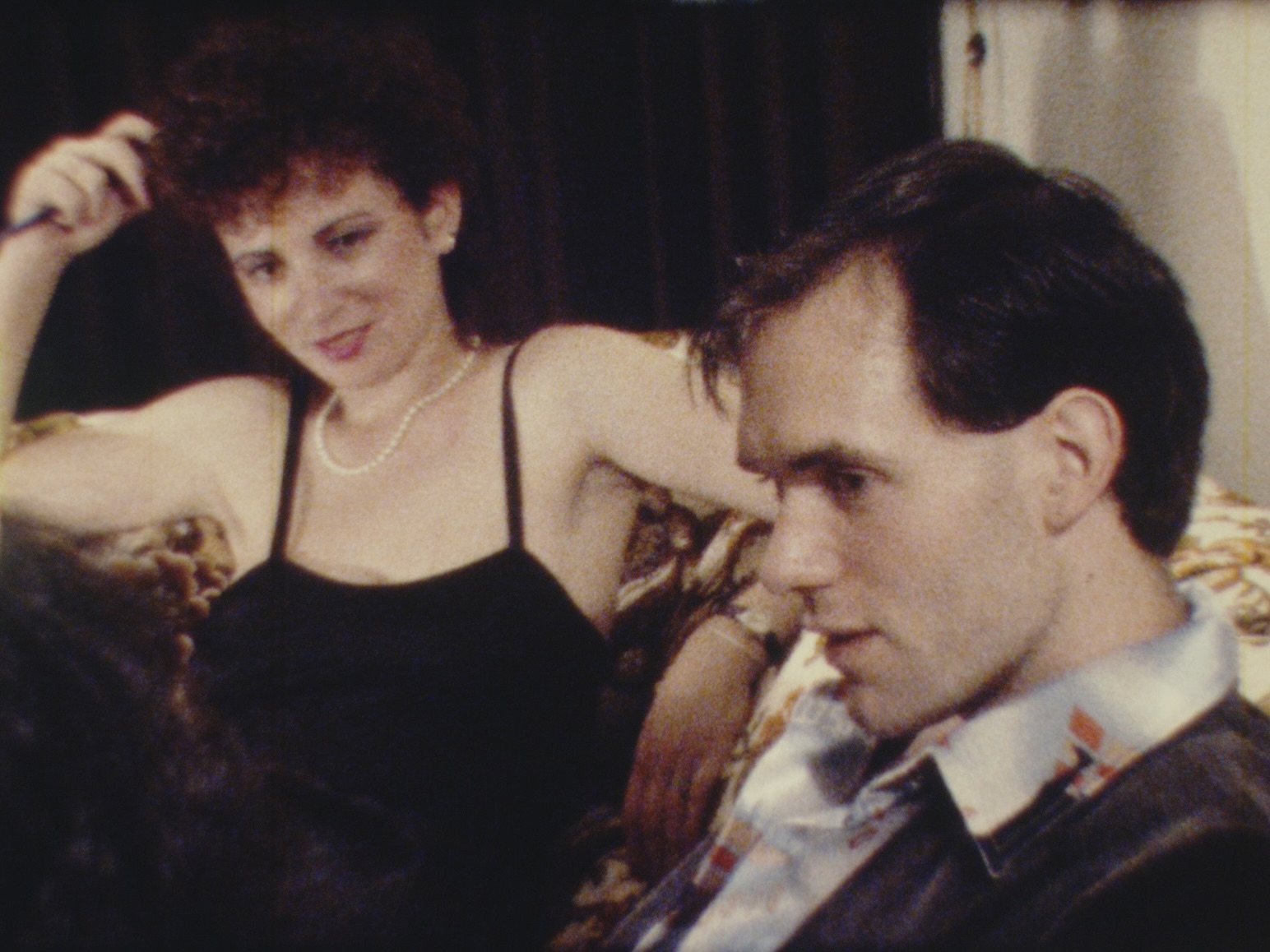
Liberty’s Booty is an investigation into prostitution from a female perspective under a late capitalist economy. The film is also a document and a celebration of a New York subculture in the late seventies. With a dense mix of real testimonies, verité footage and acted out scenarios, this film examines power relations and the commodification of the body. The film alludes to a growing globalisation with its reference to a MacDonalds strike in Dublin and imagery of Pope Paul’s visit to Ireland in 1979 which in retrospect, is seen as marking a final attempt to halt the transformation of Irish society. (Lux)
EN
Scott McDonald: The day after you showed Liberty’s Booty in Utica, one of the students in my class said it was a documentary, but done from the inside rather than the outside. I think that was a good point. You can feel that the filmmaker sees herself as being a part of the same community that the people in the film are in, that you're not coming in to examine a group of women who you feel are completely different from you. What was your feeling about making a film about prostitutes?
Vivienne Dick: They knew friends of mine, and we were talking about prostitution quite a bit. I was very interested to meet them, curious about them, of course, but also interested in what they had to say. I found them really vocal; they were very interested in doing the film and in bringing out stuff that they thought should be said about their work. Another thing, it's not limited to houses of prostitution – it moves to other people’s apartments. People get confused and think, oh, they’re all prostitutes; she’s a prostitute, she’s a prostitute… The whole point is that they may or may not be. How do you know who’s a prostitute and who isn’t? Most people who work as prostitutes are not your stereotype at all. The whole work situation in New York makes everyone a prostitute – in the other sense, anyway. We’re all prostitutes to somebody. The film is playing with all that. When I was a kid, prostitutes were really outside of society. Today, too, they have no rights, even though they’re just like anybody else. Like she says in the film, it could be your sister – it could be anybody.
In a number of places you show males, tricks. Were they actually men who had come for prostitutes?
They were actors. Whenever you see a movie with prostitutes in it, the camera and the male director always examine the prostitute, the way she looks and this and that. She’s this object or something. This film is different: the prostitutes are people telling me what they think, and talking about the men and how they look, what it’s like to be with them and how stupid a lot of them are. This idea of going to a prostitute to get off is such a peculiar thing. You hand over some money and pretend you control someone for an hour. It’s an indication of some sort of warped repressive sexual thing; it reflects a kind of organization outside of the society, but it’s all part of the American system. That’s why this liberty thing is such an irony. It has to do with pretense, too. If you’re a prostitute, you’re putting on this act. You can’t be real; you have to suppress that because it’s not going to do you any good in this society. And the tricks enjoy or even believe the pretense – it’s always seemed peculiar to me.
Vivienne Dick in conversation with Scott MacDonald1
- 1
Vivienne Dick and Scott MacDonald, “Interview with Vivienne Dick,” October 20 (Spring 1982): 82–101.

